
Taberez Ahmed Neyazi, National University of Singapore
Regina Lawrence, University of Oregon
10.25358/openscience-15835, PDF
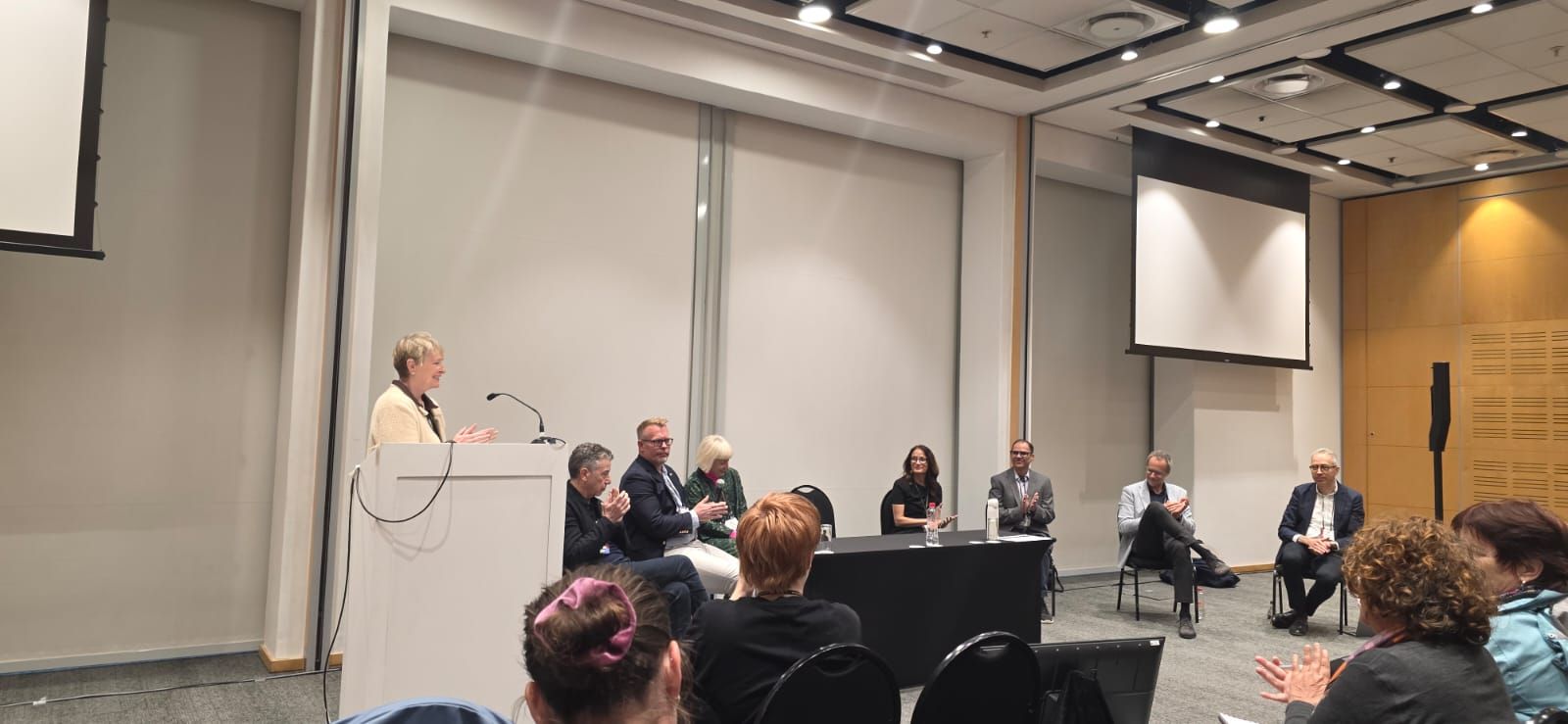
On April 10. 2026, we hosted a gathering of journal editors to collectively reflect on the evolving challenges facing peer review and scholarly publishing and to develop practical, collaborative responses. Participants included twenty editors in chief, co-editors, and associate editors of journals in communication, political science, and adjacent fields, as well as one publisher’s representative and one academic association representative. Discussions ranged from reviewer recruitment and editorial workload to diversity, open access, transparency, and the growing influence of generative AI. While participants examined a wide range of issues, a consistent theme emerged: many of the challenges confronting journal editors are systemic rather than journal-specific. Scholarship continues to be heavily dominated by the Global North, with limited representation from the Global South, and issues of authorship and editorial board diversity remain ongoing challenges. Increasing submission volumes, reviewer fatigue, inequities in publication opportunities, and uncertainty surrounding AI all require coordinated responses that extend beyond individual editorial teams. This workshop was followed up by a Roundtable discussion during the 76th International Communication Association (ICA) meeting on June 6, 2026 in Cape Town, which brought together some of the original participants along with new participants to further reflect on these themes.

Major Challenges Facing Peer Review and Scholarly Publishing
Rising Workloads and Capacity Constraints
Participants in the workshop and the panel consistently reported substantial growth in manuscript submissions. Some journals have experienced a doubling of submissions in recent years, while others now receive several thousand manuscripts annually, driven in part by the increasing availability of AI-assisted writing tools that reduce the effort required to produce manuscripts. At the same time, journals are receiving more submissions that fall only marginally within their scope, creating additional screening burdens.
These trends have significantly altered the editorial role. Editors described spending less time on substantive intellectual engagement and more time managing workflows, identifying suitable reviewers, monitoring timelines, and communicating decisions. The administrative burden of running a journal has expanded without corresponding increases in support or resources.
Participants also expressed frustration with manuscript management systems. Reviewer matching tools often rely on self-reported keywords rather than demonstrated expertise, reviewer information is frequently siloed within individual journals, and systems often fail to automate routine processes effectively. Many editors described developing informal workarounds rather than relying on platform functionality, which further places extra responsibilities on the part of editors.
Reviewer Recruitment and Sustainability
Reviewer recruitment emerged as one of the most pressing concerns discussed during the workshop and the panel. Participants emphasized that the challenge is not simply a shortage of qualified reviewers but a concentration problem. Review requests are repeatedly directed toward a relatively small group of visible scholars, while many capable researchers at smaller institutions, outside dominant networks, or in underrepresented regions are rarely invited to review. The problem is compounded by the rising number of submissions from underrepresented parts of the world, which can increase the challenge of finding appropriate reviewers with relevant expertise.
The problem is also compounded by uneven participation from editorial board members. While many journals maintain extensive editorial boards, some members contribute little to reviewing or governance. As a result, boards sometimes function more as signals of prestige than as active contributors to editorial processes.
Participants also highlighted the absence of systematic reviewer training—a problem that may increase as editors reach beyond their limited networks of established reviewers. Most scholars learn to review informally through advisors or experience as authors, resulting in substantial variation in review quality. However, declining review quality may also stem from the growing number of review requests and the limited time reviewers have available to undertake thorough evaluations. That peer review remains largely invisible within promotion and tenure systems creates weak incentives for scholars to respond to review invitations and contribute in-depth reviews.
Equity, Diversity, and Inclusion
Many journals reported growth in submissions from scholars outside North America and Western Europe, particularly from the Global South, with a large number of submissions received from China. However, increases in submissions have not translated into equivalent increases in publication rates from the underrepresented regions.
Participants identified several reasons for this gap. Review standards often reflect methodological expectations developed in well-resourced research environments. Studies relying on convenience samples, alternative data sources, or locally available methods may be judged against standards that are difficult to meet in under-resourced contexts. Editors emphasized that these challenges often reflect disparities in training opportunities, infrastructure, and resources rather than differences in scholarly potential.
Workshop participants also noted that diversifying editorial boards, while important, does not automatically lead to more diverse publication outcomes. Similarly, citation practices continue to favor scholars from the United States and Western Europe, reinforcing existing inequalities in visibility and influence. Several participants argued that diversity discussions should extend beyond geography and demographics to include methodological and epistemological diversity, particularly for qualitative and critical scholarship.
Generative AI and Emerging Publishing Challenges
Virtually all participants across both the workshop and the panel agreed that AI is a major contributor to the rapid rise in submissions. Concerns about manuscript quality, fabricated citations, and publication incentives predate AI but now occur at greater scale and speed. But AI-detection tools are unreliable and potentially harmful if used as the basis for editorial decisions, and false positives pose particular risks for non-native English speakers. Workshop participants agreed that journal editors need more nuanced policies that focus on uses that may impact the reproducibility and integrity of data and analysis, for example, rather than generalized prohibitions on AI use.
Also, existing guidelines provide limited direction regarding reviewer use of AI. Participants raised concerns about editors or reviewers uploading manuscripts to public AI systems, potentially exposing confidential content to model training without authors’ knowledge or consent. But participants also questioned whether policies that permit some forms of AI-assisted writing by authors while prohibiting all reviewer use are conceptually sustainable.
Overall, the absence of consistent policies across journals, publishers, and scholarly associations leaves room for individual journals to experiment with new policies, but most participants agreed that some degree of coordination will be required to build policies and shape professional norms.
Emerging issues—including synthetic data generation, AI-assisted research design, and verification of author identities—suggest that AI governance will remain a rapidly evolving challenge.
Economic and Structural Challenges
Discussions of publishing economics revealed widespread concerns about transparency and resource allocation. Article processing charges (APCs) were viewed as expensive, inconsistently justified, and only partially effective as mechanisms for promoting equity. Waiver systems often fail to support scholars who do not qualify for assistance but cannot realistically afford APCs.
Editors also highlighted the substantial institutional subsidies supporting academic publishing. Universities frequently provide course releases, administrative support, and other resources that enable editorial work, while publishers capture much of the resulting revenue.
Participants described contract negotiations between scholarly societies and publishers as highly asymmetric. Editors often lack information about costs, revenues, and profit margins, as well as about arrangements struck by other journals, limiting their ability to advocate effectively for resources. Concerns were also raised about declining copy-editing standards and reduced investment in production quality and increasing reliance on automation.
Transparency and Accountability
The workshop identified transparency as a recurring concern across multiple aspects of scholarly publishing. Participants questioned the accuracy of many commonly reported journal metrics, noting that automated publisher reports often exclude desk rejections thereby underreporting the actual wait time to peer review process faced by authors.
Participants further noted the absence of consistent mechanisms for sharing editorial data, including acceptance rates, desk rejection rates, diversity indicators, and policy changes. Without transparent reporting, it is difficult for authors, editorial boards, and scholarly communities to assess journal performance, identify the underlying issues and hold institutions accountable.
Solutions and Recommendations
Actions for Editors
Participants identified a range of practical steps that journals could implement—though participants also noted that increasing workloads and inadequate publisher support can limit editors’ capacity to innovate.
First, editors can protect reviewer capacity through more efficient editorial triage, including higher desk rejection rates. Desk rejects can include developmental feedback, even when brief, to help authors understand editorial decisions. For journals receiving a high volume of submissions, such developmental feedback could be restricted to early career scholars and/or to manuscripts that clearly fall within the journal’s scope.
Second, journals can broaden reviewer pools by actively identifying scholars outside traditional networks, recruiting internationally, and involving early-career researchers more systematically. Editorial boards should be refreshed regularly, and editors should consider adding more early career scholars to their boards.
Third, reviewer development should become a more deliberate component of journal operations. Shadow-review programs, detailed decision letters that demonstrate engaged and constructive reviews can all contribute to building review capacity over time. Reviewer training initiatives could be offered through special workshops during the associations’ annual meetings.
Fourth, editors can promote inclusion by creating mentorship pathways for promising but underdeveloped submissions, encouraging broader citation practices, supporting methodological diversity, and organizing outreach activities for international and early-career scholars. Journals can create teams of mentors composed of editorial board members.
Fifth, greater editorial oversight and accountability are needed to maintain an efficient review process. Editors should actively monitor manuscript progress and routinely follow up on overdue reviews, particularly when review timelines exceed the expected 60- or 90-day period. Keeping authors informed when delays occur is particularly important for junior faculty members and early-career researchers, for whom timely publication is often critical for career progression, promotion, and tenure considerations.
Sixth, with respect to AI, participants recommended moving beyond simple disclosure checkboxes toward more substantive reporting of how AI tools were used during research and manuscript preparation. Journal guidelines should clearly distinguish acceptable and unacceptable uses of AI for both authors and reviewers, particularly regarding confidentiality and manuscript uploading.
Finally, editors can strengthen accountability through annual editor reports, journal policy updates, and regular communication with authors and editorial boards through editorials. Some editors recommended developing improved manuscript-transfer mechanisms, where articles could be transferred between journals along with reviewer comments, a model often followed by natural science journals.
Actions for Publishers
Many of the challenges identified during the workshop and the panel require publisher-level solutions.
Participants emphasized the need for greater investment in editorial infrastructure, including funding for editorial assistants and administrative support. Improved reviewer-matching systems that draw on publication records, reference networks, and demonstrated expertise could significantly reduce editorial workload. Instead of simple keyword matching, reviewers should be identified based on domain expertise that could be easily integrated within automated submission systems.
Publishers could also facilitate the creation of shared reviewer databases, portable reviewer-credit systems, and cross-journal recognition programs. Such infrastructure would help distribute review requests more equitably while providing meaningful recognition for reviewer contributions. More active reviewers should be rewarded with APCs credit by the publisher that could be used for open access publication.
AI governance was viewed as another area requiring publisher leadership. To the extent that the rise of AI necessitates new professional norms and practices, clear policies on manuscript confidentiality, AI-assisted workflows, and acceptable uses of AI should be established at the publisher level rather than left entirely to individual journals.
Participants also called for greater transparency regarding APCs, revenues, costs, and journal performance metrics. Publishers should provide associations and editors with meaningful financial information and ensure that publicly reported metrics accurately reflect peer review timelines. Reinvestment of publishing revenues into editorial support, reviewer development, and mentoring programs was widely viewed as both feasible and necessary.
Actions for Scholarly Associations and the Academic Community
Our workshop and the roundtable discussion repeatedly highlighted the importance of collective action beyond individual journals or publishers.
For example, to continue building and refreshing the pool of reviewers, norms of reciprocity need to be reinforced in the academic community. Authors submitting their work to a journal should be willing to then review for that particular journal irrespective of the outcome of their own manuscript.
Scholarly associations are well positioned to coordinate graduate-level reviewer training, develop recommended frameworks for AI policies and practices, support diversity initiatives, and facilitate mentoring programs. They could also serve as collective bargaining bodies during publisher negotiations, advocating for minimum standards regarding editorial compensation, APC transparency, and resource allocation.
Participants emphasized that many structural challenges—including reviewer recognition, diversity outcomes, AI governance, and publishing economics—cannot be solved by journals acting independently. Field-wide coordination will be essential for meaningful reform.
Finally, the participants in both the workshop and the panel emphasized that the work of the journal editor is often solitary and siloed, and called for regularly organized roundtable panels as well as private editor gatherings at future conferences. They also recommended conducting a comparative survey of editorial resources and workloads, to further understand these challenges and generate meaningful interventions.
Conclusion
The workshop and the follow up roundtable highlighted a publishing ecosystem under increasing strain but also identified significant opportunities for improvement. Reviewer shortages, editorial workload pressures, diversity challenges, economic inequities, and AI-related uncertainties are interconnected problems that require coordinated responses.
Three broad conclusions emerged. First, the most significant challenges facing scholarly publishing are systemic rather than journal-specific. Second, while generative AI is having a significant impact on the quantity and quality of submissions, it is also amplifying longstanding weaknesses in the peer-review system that predate AI’s rise. Third, meaningful reform will require collaboration among editors, publishers, scholarly associations, universities, and researchers themselves.
Sustaining peer review as a cornerstone of scholarly communication will depend not only on technological innovation but also on renewed investment in the people, institutions, and collective norms that make scholarly publishing possible.
Acknowledgements:
The workshop was made possible with the generous support of the Political Communication division of International Communication Association (ICA) and American Political Science Association (APSA). The authors are particularly grateful to Kate Kenski for supporting the initial idea for the workshop. We also extend our sincere thanks to Silvio Waisboard for hosting the event at George Washington University (April 10, 2026). Finally, we would like to thank the workshop and roundtable participants, as this report is a compilation of their valuable insights.
Participants in the workshop
Adam Berinsky (American Journal of Political Science), Porismita Borah (International Journal of Public Opinion Research), David R. Ewoldsen (Journal of Communication), Timothy Hellwig (The Journal of Politics), Phil Jones (Public Opinion Quarterly), Sebastian Karcher (American Political Science Review), Jörg Matthes (Communication Theory), Tai-Quan “Winson” Peng (Human Communication Research), Mike Schmierbach (Mass Communication and Society), Lijiang Shen (Communication Methods and Measures), Elizabeth Suhay (Political Psychology), Terri Towner (Journal of Information, Technology and Politics), Silvio Waisbord (International Journal of Communication), Shuhua Zhou (Journal of Broadcasting & Electronic Media), Matt Zook (Big Data and Society).
Organizers: Taberez A. Neyazi (The International Journal of Press/Politics) and Regina Lawrence (Political Communication)
External Representatives
Kate Kenski (ICA Political Communication Division), Sandra Vera Zambrano (ICA Political Communication Division), Jonathan Krebs (SAGE Publishing), Madison Schroder (Research Assistant)
Participants in the ICA Roundtable, June 4-8, 2026, Cape Town
Porismita Borah (International Journal of Public Opinion Research), Dan Mercea (Information, Communication and Society), Folker Hanusch (Journalism Studies), Oscar Westlund (Digital Journalism), Silvio Waisbord (International Journal of Communication), Zizi Papacharissi (Social Media and Society)
Organizers: Taberez A. Neyazi (The International Journal of Press/Politics) and Regina Lawrence (Political Communication)
Dr Taberez Ahmed Neyazi is Associate Professor and Director of Digital Campaign Asia project in the Department of Communications and New Media at the National University of Singapore (NUS). He is also a Principal Investigator at the Centre for Trusted Internet and Community, NUS. He has authored Political Communication and Mobilisation: The Hindi Media in India (Cambridge University Press, 2018) and published several journal articles and book chapters. He is a Member in the School of Social Science at the Institute for Advanced Study (IAS), Princeton (2025 –2026). He is also the Editor-in-Chief at The International Journal of Press/Politics.
Regina G. Lawrence is Professor and Dean in the School of Journalism and Communication at the University of Oregon. Her research focuses on press-state relations; journalistic norms, routines and innovations; local news and information ecosystems; and the role of the media, gender, and social identity in political communication. Her studies have appeared in numerous journals, and her books include When the Press Fails: Political Power and the News Media from Iraq to Katrina; Hillary Clinton’s Race for the White House: Gender Politics and the Media on the Campaign Trail; and The Politics of Force: Media and the Construction of Police Brutality, which was reissued in 2022 by Oxford University Press.