Letter from the Editor: Data Constraints and the Future of Political Communication Research

Isabella Gonçalves, Johannes Gutenberg University Mainz

10.25358/openscience-15819, PDF

In recent years, political communication researchers have faced many challenges, including reduced academic freedom (Kinzelbach et al., 2025), insufficient funding for our field´s core themes (Benton, 2025), and limited data access, materializing as an “APIcalypise” (Bruns, 2019). These challenges are often interconnected. For instance, when the political climate is less supportive of academic and scientific advancement in general, public policies and regulation are less likely to pressure platforms to grant researchers access to data. Nevertheless, gaining access to data represents one of the most fundamental cornerstones of academic research. Even with funding, we cannot gain insights into the questions we are interested in without access to data. In many countries around the world, a lack of funding and restricted academic freedom are daily realities for many researchers since many years. Nevertheless, they find the courage to continue researching their interests. This issue focuses on the theme “Political Communication Research under Data Constraints” because the matter of accessing data is actually about having the raw material as scholars.

Data is where research begins. This issue explores various questions and issues related to data access in our field. In recent years, we have witnessed significant changes in data access policies by social media platforms. We have seen data access become more constrained and social media platforms become less likely to provide researchers with the data they need. The first contribution in this issue, by Bruns and Vodden (2026), illustrates the evolution of API closures in recent years. They demonstrate how API access has transformed into clean room environments, exemplified by the replacement of CrowdTangle with the Meta Content Library (MCL). The authors discuss the limitations of clean room environments and the challenges they pose for empirical research.

A matter that deserves attention, now that multiple countries in the Global North are facing the barriers in accessing this raw material, is how accessing data has been a historic problem in the Global Majority. These barriers originate from multiple reasons. First, there is a structural knowledge barrier. In many institutions in the Global Majority, communication scholars lack the programming skills and training needed to access platform data, as well as the quantitative training to interpret the big data even if they gain access to it. Second, there is the policy problem. Countries in the Global North have more bargaining power, and they are more likely to effectively pressure platforms to give access to data for researchers. In their essay, Santini and colleagues (2026) show that we continue to see persistent inequalities when it comes to data access. As they argue, technological corporations are increasingly adopting a selective compliance approach, and the EU and the UK benefit from more favorable data regimes compared to the Global Majority. The path forward, according to them, is to pressure for global transparency standards.

This issue also features reasons for hope regarding data access, as exemplified in the Digital Service Act (DSA). Although data is granted for questions focusing on “systemic risks to the Union”, Klinger and colleagues (2026) show that data can be granted to researchers outside the European Union for questions surrounding platform dynamics, cross-platform flows, affordance effects, and network structures. In their essay, Klinger and colleagues (2026) explain in detail what exactly the DSA is about, what changes, and the possibilities underlying it. The major benefit from the DSA is its historic possibility: now platforms are under a legal obligation to share data with researchers, a historic step that other major global corporations were never obliged to.

As a field, we should also reflect on possible solutions and other sources of data for our research. First, there are always the traditional methods where our field began with, such as survey data. However, it is always important to be mindful about our practice to retrieve this kind of data. In the essay by Jost (2026), he reflects on the price of convenience of using commercial panels. He exercises a critique of the problems underlying convenience samples and also offers new paths forward. Two should be highlighted. First, Jost (2026) argues that high-quality probability-based datasets (such as ANES) are underused in political communication research. Second, he also highlights that our field fails to generate datasets for common use, and this could be a path forward. Many researchers receive funding and manage to conduct surveys with probability-based methods, but the datasets never see the light of the day. Sharing such datasets, if rewarded in our field, could benefit us (and the researchers sharing it) enormously. For example, they could generate citations and be valued just like any other high quality academic publication.

A good hand-on example to this suggested solution is the essay by Soto Ruidias and Casey (2026), where they share their experience in building the CanberraInbox, a dataset with e-newsletters published by Australian MPs. In their essay, they show potential questions that can be answered with this dataset. In addition, they also explain step by step how to build a dataset with similar architecture in other countries (with codes shared!). They also reflect on methodological challenges, limitations, and possibilities. As they argue, in an age of restricted data, maybe what we should begin reflecting on is a new model of empirical research. A possible answer is to begin a culture of building datasets. For that, we should also consider such work as central in our field and recognize it accordingly.

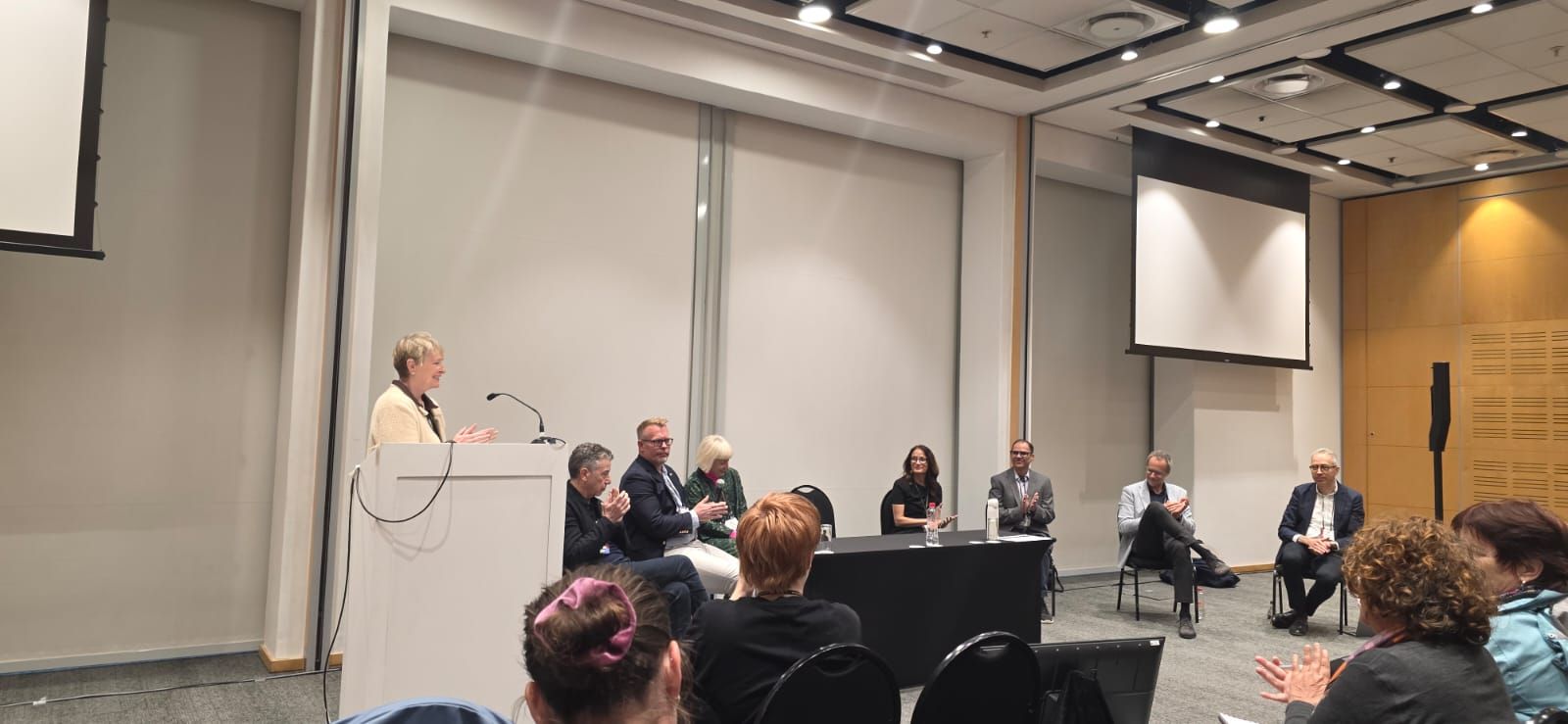
This issue also includes a report by Neyazi and Lawrence (2026) on peer review challenges and the future of scholarly publishing in the age of AI. This theme intersects with our central concern, as AI tools are increasingly being explored as possible sources of data and methodological tools for data analysis. Their report, grounded in the Workshop for Editors (supported by the APSA and ICA Political Communication Divisions) and the ICA Roundtable in Cape Town, raises timely questions about how the field is being reshaped.

The issue closes with an interview with Ayala Panievsky, recipient of the International Journal of Press/Politics Hazel Gaudet-Erskine Best Book Award 2026, for her book The New Censorship: How the War on the Media is Taking Us Down. Her work is a fitting companion to this issue: if data constraints limit what researchers can access, political attacks limit what journalists can say, and how the press responds to the democratic risks we are facing. As I have argued at the beginning of this editorial, the questions of reduced academic (and press) freedom, data access, and resources for academic research are interconnected. We have to always be vigilant about how our field can respond to them.

Together, the contributions in this issue are an invitation to reimagine how our field produces, shares, and protects its raw material. Happy reading!

References

Benton, J. (2025, April 21). National Science Foundation cancels research grants related to misinformation and disinformation. Nieman Lab. https://www.niemanlab.org/2025/04/national-science-foundation-cancels-research-grants-related-to-misinformation-and-disinformation/

Bruns, A. (2019). After the ‘APIcalypse’: Social media platforms and their fight against critical scholarly research. Information, Communication & Society, 22(11), 1544–1566. https://doi.org/10.1080/1369118X.2019.1637447

Bruns, A., Vodden, L. (2026). The Challenges of Working with Platform Data from Clean Room Environments. Political Communication Report, 33.

Jost, P. (2026). The Price of Convenience: Commercial Panels and Survey Data Quality in Political Communication. Political Communication Report, 33.

Kinzelbach, K., Saliba, I., Spannagel, J., & Quinn, R. (2025). Academic Freedom Index. FAU Erlangen-Nürnberg & Scholars at Risk. https://academic-freedom-index.net/

Klinger, U., Ohme, J., Seiling, L. K. (2026). Open Sesame? Hopes and Limits of European Platform Data Access Regulation. Political Communication Report, 33.

Neyazi, T. A., Lawrence, R. (2026). Peer Review Challenges and the Future of Scholarly Publishing in the Age of AI: A Report. Political Communication Report, 33.

Santini, R. M., Leal, H., Belisario, A., Mattos, B. (2026). Unequal Data Access Regimes in Social Media. Political Communication Report, 33.

Soto Ruidias, R. R., Casey, D. (2026). CanberraInbox: Building a New Data Infrastructure for Political Communication. Political Communication Report, 33.

Author

Isabella Gonçalves is a postdoctoral researcher at Johannes Gutenberg University Mainz. Her work focuses on political communication and journalism studies. Her research examines the structural and discursive factors that contribute to the formation and reinforcement of social divisions, with a particular emphasis on divisive and negative political discourse, the underrepresentation of marginalized groups in political communication and media, and anti-media hostility. Alongside her research, she serves as editor of the Political Communication Report and manages the websites and social media channels for the Political Communication divisions of APSA and ICA. She is also an active member of the DigiWorld network and the Digital Media and Society Observatory.

Bruns & Vodden – The Challenges of Working with Platform Data from Clean Room Environments

Axel Bruns, Digital Media Research Centre, Queensland University of Technology

Laura Vodden, Digital Media Research Centre, Queensland University of Technology

10.25358/openscience-15825, PDF

Modes of researcher access to digital trace data from social media and other digital platforms have undergone several changes over the decades. What Puschmann (2019) called the “Wild West” of relatively permissive data access via Application Programming Interfaces (APIs) – primarily designed to support third-party application development but also highly useful for research purposes – ended with the “APIcalypse” (Bruns, 2019) in the aftermath of the Cambridge Analytica scandal. Platform providers such as Meta and Twitter used the scandal as an excuse to decommission or severely curtail their APIs, ostensibly to prevent abuse. However, API closures also frustrate critical, independent, public-interest scrutiny by researchers. This is especially concerning given that platforms have been increasingly criticised for their lack of decisive action against ills including mis- and disinformation, hate speech, and other abuse (Bruns, 2018).

Such criticism has intensified since the mis- and disinformation infodemic (United Nations, 2020) accompanying the COVID-19 pandemic, the “enshittification” (Doctorow, 2025) of Twitter under Elon Musk, and the role of social media-based propaganda in democratic backsliding trends observed globally. New regulatory interventions – most prominently, the European Union’s Digital Services Act and its provisions under Article 40 (Giglietto & Puschmann, 2026) – now require major online platforms to provide comprehensive data access to researchers investigating “systemic risks” to democratic societies. Departing from conventional API models, a growing number of platforms now provide such access via ‘clean room’ facilities whose fit for purpose has yet to be comprehensively assessed.

Clean Rooms in Principle and Practice

The clean room data access model was created in response to concerns that research data provided by platforms for access via conventional APIs may be stored, shared, and reused in ways that extend beyond the terms and conditions set in API access agreements, and by data users beyond the researchers who had been formally authorised to do so. In other words, once retrieved from traditional APIs, platforms no longer have any effective control over what happens with datasets, and rely on researchers’ adherence to applicable ethical, privacy, and legal rules. Such concerns are valid, but have also been overemphasised by platforms in their attempts to justify the closure of API access models. For example, while data sharing amongst academics has constituted a legal grey zone ever since APIs became widely available, genuine negative effects from this are exceptionally rare. Furthermore, the public sharing of source datasets is strongly encouraged by research funders and publishers to ensure the transparency, rigour, and replicability of scholarly work, and the legality of deeply restrictive platform prohibitions against data sharing is disputable. Additionally, while research ethics require the protection of ordinary users who made and then deleted ill-advised posts, this concern must also be balanced against the need to document key platform activities for subsequent analysis and as a part of communicative history. From Donald Trump’s infamous ‘covfefe’ tweet through the accounts of major political and other actors to the disinformation and propaganda posts made in the course of domestic and foreign influence operations, it is essential to preserve such content for posterity even if it is deleted from the platform itself (Weller et al., 2026).

Whatever its actual merits, the argument that platforms must retain tighter control over their (or more appropriately, their users’) data – which implies that researchers themselves cannot be trusted to handle such datasets appropriately – has been central to the introduction of clean room environments as an alternative data access model. Such clean room models no longer permit researchers to retrieve platform data at scale for storage and analysis on their own computers or systems (or if they do, restrict this to a small subset of all available data, and/or to the export of aggregate communication statistics only). Rather than such data downloads from the API to researchers’ own computers, they instead provide a platform-hosted research environment that is disconnected from the open Web to avoid any data leakages – the ‘clean room’ – that researchers log on to and within which they are allowed to interact with the platform data, often in strictly prescribed fashion and with a limited set of analytical tools as provided by the platform.

Of these clean room environments, the Meta Content Library (MCL), covering Meta platforms Facebook, Instagram, and Threads, is the most prominent to date. The MCL replaced CrowdTangle, previously a third-party data access tool for Facebook and Instagram which Meta acquired in 2016 (Newton, 2016) and which provided large-scale downloads of posts from selected public pages and groups on Facebook and public profiles on Instagram via Web-based and API facilities. Following CrowdTangle’s decommissioning in August 2024 (Grevy Gotfredsen & Dowling, 2024), and a beta trial phase for selected MCL users, approved applicants were granted full access in November 2024 – coincidentally resulting in substantial limitations to research data access to Meta’s platforms precisely during the final phase of the 2024 US presidential election.

The MCL has undergone several substantial changes since its initial release. Access was provided at first via a clean room environment hosted by the Social Media Archive (SOMAR), a facility housed at the Inter-University Consortium for Political and Social Research (ICPSR) at the University of Michigan. To access the system, users first connected remotely to a virtual Windows machine, then connected from there to a virtual Linux machine, started up a Jupyter Notebook instance within that environment, and there could finally write Python or R scripts to access the MCL data hosted on Amazon Web Services (AWS) database servers.

This cumbersome and – especially from outside the United States – exceptionally slow ‘Virtual Data Enclave’ (VDE) has since been complemented and increasingly replaced by an alternative access framework, the ‘Secure Research Environment’ (SRE): streamlining the access process, the SRE uses the Amazon Workplaces Secure Browser plugin to connect directly to a virtual browser within the user’s own Web browser, and launches a Jupyter Notebook instance where researchers can again write Python or R code to query and process data from Meta’s AWS servers. While the SRE represents a vast improvement to the usability of the system, it addresses concerns about the handling of deleted posts and comments by mandatorily deleting all accessed data from the working directory on the first of each calendar month; this severely obstructs longitudinal studies.

Key Limitations of Clean Room Environments

Clean room environments like the SRE and VDE share an underlying philosophy of data provision and processing that severely limits both users and uses. Previously, API-provided datasets, once accessed, could be processed and analysed by researchers not only programmatically, but also interactively and visually using industry-standard data analytics tools such as Tableau or Power BI. The limitation to working with Jupyter Notebooks functionally excludes researchers without the necessary coding skills (or support staff) from accessing these data; this is deeply problematic since much of the most critical research on social media platforms and practices originates from disciplines like media studies, communication studies, and political communication whose researchers, at least historically, have had far less formal programming training than their colleagues in computer science.

Even where such hurdles in developing scripts for data access and processing can be overcome, data analysis and interpretation remain severely curtailed by the limited set of analytical tools available within clean room environments. It is usually possible to install standard data processing packages from the Python Package Index (PyPI) or Comprehensive R Archive Network (CRAN). More specialised social media analytics tools (as developed by individual researchers for their own or the broader research community’s use) are sometimes permitted, at the discretion of the clean room provider and subject to internal review. Researchers may also be able to copy and paste publicly-released data processing scripts – such as Giglietto’s (2025) scripts for assessing the impact of Meta newsfeed policies on engagement with politicians’ posts – into the clean room environment, but for more expansive and complex workflows this process quickly becomes inefficient and error-prone. Overall, the range of computational tools available to clean room users is highly restricted.

More generally, this emphasis on the computational processing of social media data privileges mostly quantitative analytical approaches despite the superior insights generated by mixed-methods approaches to social media data analysis. Clean room environments are not usually set up to support qualitative research components. Even small subsets of data usually cannot be exported, coded outside the clean room, and then reimported into the environment for subsequent analysis. They do not provide manual qualitative data coding tools and facilities such as the industry-standard NVivo or MaxQDA, or even basic spreadsheet editors. Additionally, the inability to access the open Web from within the clean room prevents now-emerging uses of commercial Large Language Models (LLMs) to assist qualitative data coding. In some clean room setups, it will be possible to install open-source LLMs, via package repositories or direct upload, but this too is limited by the hard drive and memory space allocations available within the virtual environment.

Finally, in addition to privileging quantitative over qualitative or mixed-methods approaches to data analysis and interpretation, the enclosure of research processes within exclusive clean room spaces hosted by platform providers also creates substantial hurdles to any cross-platform or comparative analysis, which is especially problematic as the communicative environments provided by social media platforms have diversified considerably, in part as a consequence of the decline of Twitter (Bruns, 2026). By their very design, clean rooms exist in isolation; data from one clean room environment cannot be transferred to and combined with data from another clean room. And even where data from one platform were retrieved via conventional APIs or other means, the upload of such datasets to another platform’s clean room environment may be explicitly prohibited by the API’s terms of service. One solution, then, is for researchers to conduct their analyses in parallel across different clean rooms and other research environments, and to export and combine only the final aggregate outcomes for comparison and correlation. On top of multiplying the workload needed to carry out such parallelised research, any resulting cross-platform analysis will inevitably be restricted to very high-level, abstract observations.

Conclusion: Researching the Walled Garden, from within the Walled Garden

While the Meta Content Library is perhaps the most significant clean room for social media data access at present, this model is not limited to Meta alone; it is not even limited to social media data access. Notably, the TDM Studio service offered by media content database ProQuest embraces a similar clean room philosophy to enable its users to computationally process large datasets of news media articles and similar content without exporting the data. Here, the motivation for the clean room model appears to be a concern about large-scale copyright violations, rather than about privacy (since ProQuest provides only professionally produced, published articles, licenced from commercial and public-service publishers). Here, too, however, clean rooms privilege some users and uses over others, in ways that shape, channel, and constrain the research that can be done with this platform.

We raise these issues not to dismiss the clean room concept altogether: the ethical, moral, legal, privacy, and copyright concerns that underpin the platforms’ justifications for these approaches should be, and are, taken seriously by researchers as they access, process, analyse, interpret, and publish results from their data.

Finally, the increased complexity of the clean room model also further widens the gap between those research teams who are able to navigate the cumbersome accreditation, access, (self-) training, data access, analysis, and results extraction and publication process and those who are not. This gap exists between interdisciplinary research teams at large, well-resourced universities and isolated, individual researchers at smaller institutions, but more systematically also between universities in the Global North and those in the Majority World. In concert with the broader platform data availability and fidelity issues that still persist for non-Global North, non-English-language contexts, this will continue to channel scholarly attention to the relatively well-covered WEIRD (Western, Educated, Industrialised, Rich, Democratic) and English-speaking nations, while contemporaneous developments in the Majority World that deserve at least as much attention are addressed much more rarely.

As the sole point of origin for authoritative data on what happens on their platforms, social media providers remain in a powerful position; while they are increasingly required by laws such as the EU’s Digital Services Act to facilitate research data access, exactly how they do so still impacts substantially on whether such access is genuinely useful to researchers. Legislators and regulators must not only continue to pay close attention, therefore, to the base requirement that (some) access is provided, but also remain vigilant about whether and to what extent such access actually meets researchers’ needs. That the European Union has already begun proceedings against Meta and TikTok for failing in these duties is encouraging (European Commission, 2025), but much more pressure must yet be brought on these and other platforms – not least also in jurisdictions beyond Europe.

References

Bruns, A. (2018). Facebook Shuts the Gate after the Horse has Bolted, and Hurts Real Research in the Process. Internet Policy Review. https://policyreview.info/articles/news/facebook-shuts-gate-after-horse-has-bolted-and-hurts-real-research-process/786

Bruns, A. (2019). After the ‘APIcalypse’: Social Media Platforms and Their Fight against Critical Scholarly Research. Information, Communication & Society, 22(11), 1544–66. https://doi.org/10.1080/1369118X.2019.1637447

Bruns, A. (2026). The Death of Twitter and the Decline of Public Debate Online. M/C Journal29(2). https://doi.org/10.5204/mcj.3247

Doctorow, Cory. Enshittification: Why Everything Suddenly Got Worse and What to Do about It. London: Verso, 2025.

European Commission. (2025, 24 Oct.). Commission Preliminarily Finds TikTok and Meta in Breach of their Transparency Obligations under the Digital Services Act. https://ec.europa.eu/commission/presscorner/detail/en/ip_25_2503

Giglietto, F. (2025). “A Pretty Blunt Approach”: Meta’s Political Content Reduction Policy and Italian Parliamentarians’ Facebook Visibility. SocArXiv. https://doi.org/10.31235/osf.io/8dqag_v2

Giglietto, F., & Puschmann, C. (2026). From the Wild West to the Walled Garden: The Evolution of Twitter/X Data Access for Research. M/C Journal29(2). https://doi.org/10.5204/mcj.3257

Grevy Gotfredsen, S., & Dowling, K.  (2024, 9 July). Meta Is Getting Rid of CrowdTangle—and Its Replacement Isn’t as Transparent or Accessible. Columbia Journalism Review. https://www.cjr.org/tow_center/meta-is-getting-rid-of-crowdtangle.php

Newton, C. (2016, 11 Nov.). Facebook Buys CrowdTangle, the Tool Publishers Use to Win the Internet. The Verge. https://www.theverge.com/2016/11/11/13594338/facebook-acquires-crowdtangle

Puschmann, C. (2019). An End to the Wild West of Social Media Research: A Response to Axel Bruns. Information, Communication & Society, 22(11), 1582–9. https://www.tandfonline.com/doi/abs/10.1080/1369118X.2019.1646300

United Nations. (2020, 31 Mar.). UN Tackles ‘Infodemic’ of Misinformation and Cybercrime in COVID-19 Crisis. https://www.un.org/en/un-coronavirus-communications-team/un-tackling-%E2%80%98infodemic%E2%80%99-misinformation-and-cybercrime-covid-19

Weller, K., Wang, Y., Peters, Y., & Gruber, J. B. (2026). Can 20 Years of Twitter Be Preserved? What Is Lost, What Remains, and What Is in Between. M/C Journal29(2). https://doi.org/10.5204/mcj.3253


Axel Bruns is an Australian Laureate Fellow and Professor in the Digital Media Research Centre at Queensland University of Technology in Brisbane, Australia, and a Chief Investigator in the ARC Centre of Excellence for Automated Decision-Making and Society. His books include Are Filter Bubbles Real? (2019) and Gatewatching and News Curation: Journalism, Social Media, and the Public Sphere (2018), and the edited collections Routledge Companion to Social Media and Politics (2026 / 2016), Digitizing Democracy (2019), and Twitter and Society (2014). He served as President of the Association of Internet Researchers in 2017–19.

Laura Vodden is a data scientist and PhD candidate at the Digital Media Research Centre at Queensland University of Technology, with extensive experience working with social media APIs, as well as emerging cleanroom data environments such as the Meta Content Library and ProQuest TDM Studio. Laura’s doctorate research develops methodological approaches to applying large language models to communications research, particularly for large-scale text and content analysis.


Santini et al. – Unequal Data Access Regimes in Social Media

Rose Marie Santini, NetLab UFRJ

Hugo Leal, University of Cambridge

Adriano Belisario, NetLab UFRJ

Bruno Mattos, NetLab UFRJ

10.25358/openscience-15829, PDF

The current digital architecture is largely grounded in data regimes, sociotechnical ecosystems that regulate the relationship between digital infrastructures, our online footprint, and private appropriation of public data. Under the current data regime, public social media data is not a freely accessible digital common (Fuster Morell, 2010) but part of broader digital enclosures through which technological corporations extract and fence off commodified data (Andrejevic, 2013). The digital enclosures establish a global hierarchy separating sovereign states that can regulate and enforce new data regimes. This global hierarchy is dependent on the state’s power and corporate influence, and certain states are therefore more vulnerable than others.

The prevailing economic logic of technological corporations led to a continuous deprecation of data access mechanisms. In less than a decade, we witnessed a regressive movement towards data inaccessibility. While previous data regimes contemplated unequal but existing programmatic availability of social media data, the new models significantly foreclosed access. Indeed, after a brief period of “independence by permission” (Wagner, 2023) where platforms dictated which scholars and scholarship could be informed by social media data, the natural corollary of this corporate-controlled data regime materialized as an “APIcalypse” (Bruns, 2019), a deprecation of most forms of programmatic access to data. This represents a threat against scientific research and public oversight.

Meta provides a particularly instructive case for how political communication, platform governance, and regional asymmetries interact. On the user-generated content side, the company’s approach to data transparency illustrates a broader trend from openness to restriction. What began as a relatively permissive developer ecosystem, inviting third parties to build on top of Facebook’s social graph, was progressively curtailed, especially after the Cambridge Analytica scandal heightened concerns about how extensive third-party access to platform data could be exploited, prompting restrictions that ultimately backfired on independent researchers (Venturini & Rogers, 2019). Since then, Meta has moved first toward stricter API permissions and platform review, and later toward increasingly vetted and platform-controlled research tools. Meta’s previous main interface, CrowdTangle, despite its limitations, still offered journalists and academics relatively flexible access to public content and became a key infrastructure for studying political communication on Facebook and Instagram. Its discontinuation in 2024 and replacement by the more restricted Meta Content Library (MCL) marked a further narrowing of independent access. The MCL operates as a controlled-access research environment whose terms limit researchers’ ability to programmatically and independently extract and analyze structured data. Together with X’s closure of academic access and monetization of its API, this transition has been widely criticized as emblematic of the “post-API” era (Tromble, 2021) in social media research.

Data Access Inequalities

Online platforms’ data access regimes appear to be entering a new phase. Technological corporations are adopting a model of selective compliance. According to our findings, while data access is still insufficient, the EU and the UK benefit from more favorable data regimes, particularly when it comes to online advertisement data. This is aggravating the North-South digital divide. For example, as our report also shows, while the EU has established legal mechanisms for researcher access to platform data through Article 40 of the DSA and mandates platform advertising transparency through Article 39, Brazil lacks a comprehensive platform-transparency framework, despite pioneering a civil rights framework for the internet (Moncau & Arguelhes, 2020) and requiring certain data transparency requirements from social media companies for adjacent issues such as women’s rights, child protection, and electoral campaigns.

Empirically documenting and measuring these unequal data access regimes is one of the key contributions of our recent policy report, “Data Not Found” (Santini et al., 2026), which brings results from the Social Media Data Transparency Index, an initiative developed by NetLab UFRJ (Federal University of Rio de Janeiro, Brazil). In its second edition, with the support of the Minderoo Centre for Technology and Democracy (University of Cambridge, UK), the Index systematically reviewed the user-generated content (UGC) and advertising data transparency standards of 15 social media platforms across three jurisdictions: Brazil, the UK, and the EU. The methodology, data, and evaluation sheets are openly available in the project repository[1] to support further research on platform transparency.

While access to social media data has recently deteriorated across the board, the situation is not equally bad. In our assessment, Brazil consistently recorded the lowest overall transparency scores for both public UGC and advertising data, while the EU often achieved the highest. Even in highly regulated jurisdictions, however, the landscape remains highly fragmented and dependent on the platforms’ discretion.

Our findings align with prior evidence that platforms such as X, Snapchat, and Pinterest, despite falling within the scope of the DSA, still fail to meet minimum transparency standards (European Centre for Algorithmic Transparency, 2025). X maintains relatively decent, though costly UGC data access mechanisms, but its advertising repository exists largely in name only in the EU and is unavailable in other jurisdictions. Snapchat and Pinterest provide no functional transparency resource for either content type in any region, except for a narrow set of ad tools nominally available in the EU (and, for Pinterest, also in Brazil), which we also classified as “Negligible” because they were effectively inoperative. Among platforms not covered by the DSA, widely used services such as Discord and Kwai (Kuaishou) offer no data transparency mechanisms at all in any region.

Large companies such as Meta, TikTok, and LinkedIn, in contrast, concentrate meaningful transparency in jurisdictions with stronger oversight, deploying their most functional tools where regulatory pressure is highest and withholding them where it is weakest. TikTok’s Research API, mandated under the DSA in the EU, has also been extended to researchers in the United States and the UK. Although TikTok is not subject to regulatory obligations to provide this API to researchers based in these countries, it has done so, which we hypothesize to be a form of regulatory spillover, part of the “Brussels Effect”, whereby regulatory standards adopted in the EU shape platform practices beyond its jurisdiction (Husovec & Urban, 2024).

Selective Transparency and Political Advertising

Content type also matters across jurisdictions: UGC and advertising data vary significantly by region. This difference has important implications, given that online advertising has been used to enable harmful practices, such as political influence operations and financial fraud. In fact, it is precisely in the domain of advertising transparency, often overlooked, that regional disparities in enforcements become most visible.

The Meta Ad Library reached our highest classification in the UK, where it discloses comprehensive information on all delivered ads and supports structured extraction across different ad types. The same infrastructure is deployed in the European Union, but the bulk-export feature has been disabled from its graphical interface following Meta’s response to the EU on the Transparency and Targeting of Political Advertising Regulation: rather than meeting the regulation’s stricter requirements for political ads, Meta announced in late 2025 that it would stop serving such content in the EU altogether and removed historical political advertising data from its archive (Votta, 2025). Compliance, in this case, produced less transparency than existed before: a paradox researchers had warned about since the earliest generation of platform ad libraries (Leerssen et al., 2019).

In the Global Majority, platforms simply maintain an opaque data regime. In Brazil, the Meta Ad Library score drops to “Deficient”. Structured extraction is restricted to ads self-labeled by advertisers as “political or related to social issues”, a classification over which advertisers have almost full control and can trivially game by reclassifying content as political or not. All remaining ads can only be browsed one by one through the web interface, with no bulk export. The architectural choice matters. Across major platforms, ad repositories require users to search by advertiser name rather than by content, topic, or targeting criteria. If one does not already know who placed an ad, it cannot be found. Coordinated networks operating through dozens of obscure pages, undisclosed third-party funding, or misleading advertiser identities therefore remain structurally undiscoverable, and the search architecture itself becomes a mechanism of opacity (Santini et al., 2026; Zalnieriute, 2021).

The broader implication of treating “political advertising” as a special category seems clear: the boundary is trivially gameable, and trying to police it leaves large blind spots intact (Krekó & Molnár, 2026). The position we defend is therefore straightforward. For large online platforms, all advertising data should be fully and globally accessible, searchable by content, topic, and targeting criteria.

Towards a More Balanced Data Regime

The data regime asymmetries must be addressed through a symmetrical governance framework that enforces universal access to public data. The accelerated development of AI and its equally rapid encroachment in our public and private life is reproducing the same unequal data regimes. Private data extractivism and algorithmic opacity are, once again, taking precedence over public oversight and platform observability (Rieder & Hofmann, 2020). The data regime is very similar, combining advanced forms of digital capitalism (Schiller, 1999) and data colonialism (Couldry & Mejias, 2019) characterized by appropriation and unequal data relations. This is only possible due to an alliance between platform capital and state power that seeks to legitimize the systematic appropriation of our individual and collective footprint through relations that replicate the colonial patterns of extraction and accumulation. Data regimes extend far beyond raw data to include the material infrastructures of digital capitalism, including data centers, cheap energy, and exploitative forms of labor.

The result of selective data access practices is an unequal global regime of platform transparency that produces second-class researchers and citizens across much of the Majority World, leaving them with weaker tools to understand the digital public sphere that increasingly shapes their lives. Citizens and policymakers are directly affected by platforms’ algorithmic distribution, opaque moderation decisions, and advertising microtargeting, yet they lack the systematic data access needed to understand how political discourse circulates, gains visibility (organically or not), and reaches different publics online.

At the intersection of unchecked platform monetization and restricted data access lie online societal harms. Citizens and communities face unprecedented digital threats, from individual abuse to large-scale, coordinated disinformation campaigns, which are becoming increasingly difficult to observe and mitigate. Researchers are denied access to the information required for public-interest scholarship; data-driven investigative journalism is severely constrained, and policymakers are now unable to rely on evidence-based policy. Ultimately, the current data regimes are stripping citizens of their fundamental freedoms and rights, while trying to dismantle any form of democratic accountability. Against the backdrop of data opacity, we propose a new global regime of data governance governed by principles of information integrity and transparency (Santini et al., 2026).

Our report suggests that regulation can push platforms toward greater transparency. That’s why companies face resistance, and even powerful nations and regions struggle to guarantee basic requirements. However, national regulation alone might leave us only with selective transparency decisions. Without clear standards and strong enforcement mechanisms, platforms retain wide discretion over whether, when, and how they comply. When companies implement transparency tools only in response to region-specific regulatory pressure, they reinforce global inequalities in data access. That discretionary power creates and perpetuates large-scale knowledge asymmetries that disproportionately disadvantage those in more vulnerable positions.

Researchers, journalists, regulators, and civil society actors in the most powerful jurisdictions and consumer markets should therefore push for global transparency standards. Without binding, interoperable, and globally applicable data access standards for large online platforms, most researchers will continue to be systematically denied access to the evidence on which knowledge depends. More importantly, these standards need to be developed with researchers, civil society, and regulators in the Majority World as equal stakeholders, not as recipients of whatever spillover the Brussels Effect happens to carry.

References

Andrejevic, M. (2013). Surveillance in the digital enclosure. In The new media of surveillance (pp. 18–40). Routledge. https://doi.org/10.4324/9781315876337-2

Bruns, A. (2019). After the ‘APIcalypse’: Social media platforms and their fight against critical scholarly research. Information, Communication & Society, 22(11), 1544–1566. https://doi.org/10.1080/1369118X.2019.1637447

Couldry, N., & Mejias, U. A. (2019). Data colonialism: Rethinking big data’s relation to the contemporary subject. Television & New Media, 20(4), 336–349. https://doi.org/10.1080/1369118X.2019.1637447

European Centre for Algorithmic Transparency. (2025). FAQs on DSA data access for researchers. European Commission. https://algorithmic-transparency.ec.europa.eu/

Fuster Morell, M. (2010). Governance of online creation communities: Provision of infrastructure for the building of digital commons [Doctoral dissertation, European University Institute]. http://hdl.handle.net/1814/14709

Husovec, M., & Urban, J. (2024, February). Will the DSA have the Brussels Effect? Verfassungsblog. https://verfassungsblog.de/will-the-dsa-have-the-brussels-effect/

Krekó, P., & Molnár, C. (2026). The Houdini ads: How and why political ads are still slipping through the filters of Google and Meta in Hungary. European Digital Media Observatory. https://edmo.eu/blog/the-houdini-ads-how-and-why-political-ads-are-still-slipping-through-the-filters-of-google-and-meta-in-hungary/

Leerssen, P., Ausloos, J., Zarouali, B., Helberger, N., & de Vreese, C. (2019). Platform ad archives: Promises and pitfalls. Internet Policy Review, 8(4). https://doi.org/10.14763/2019.4.1421

Moncau, L. F. M., & Arguelhes, D. W. (2020). The Marco Civil da Internet and digital constitutionalism. In G. Frosio (Ed.), The Oxford Handbook of Online Intermediary Liability. Oxford University Press.

O’Reilly, T., Strauss, I., & Mazzucato, M. (2024). Algorithmic attention rents: A theory of digital platform market power. Data & Policy, 6, e6. https://doi.org/10.1017/dap.2024.1

Rieder, B., & Hofmann, J. (2020). Towards platform observability. Internet Policy Review, 9(4). https://policyreview.info/articles/analysis/towards-platform-observability

Santini, R. M., Leal, H., Salles, D., Belisário, A., Mattos, B., & Pinho, D. (2026). Data not found: Transparência de redes sociais para a integridade da informação. NetLab UFRJ & Minderoo Centre for Technology and Democracy. https://doi.org/10.5281/zenodo.20084860

Schiller, D. (1999). Digital capitalism: Networking the global market system. MIT Press.

Tromble, R. (2021). Where Have All the Data Gone? A Critical Reflection on Academic Digital Research in the Post-API Age. Social Media + Society, 7(1), 2056305121988929. https://doi.org/10.1177/2056305121988929

Venturini, T., & Rogers, R. (2021). “API-Based Research” or How can Digital Sociology and Journalism Studies Learn from the Facebook and Cambridge Analytica Data Breach. Digital Journalism, 7(4), 532–540. https://doi.org/10.1080/21670811.2019.1591927

Votta, F. (2025). What data reveals about Meta and Google’s political ad ban in the EU. Tech Policy Press.

Wagner, M. W. (2023). Independence by permission. Science, 381(6656), 388–391. https://doi.org/10.1126/science.adi2430

Zalnieriute, M. (2021). Transparency washing in the digital age. AJIL Unbound, 115, 9–14. https://doi.org/10.1017/aju.2020.92


Rose Marie Santini is an Associate Professor at the School of Communication of the Federal University of Rio de Janeiro (UFRJ). She is the founder and director of the NetLab – Laboratory of Internet Studies and Social Media at the Federal University of Rio de Janeiro, Brazil.  NetLab is a research laboratory at the School of Communication, Federal University of Rio de Janeiro, with an agenda for the diagnosis of the digital disinformation phenomenon and its societal consequences in Brazil. NetLab develops computational, digital and social science methods to expand, create and implement research strategies to empirically and critically investigate the effects of the media ecosystem on public opinion – including mass media, alternative media, hyperpartisan media, junk news sites and social media analysis. NetLab’s mission is to produce empirical evidence to advance scientific knowledge, ground public debate and inform the development and governance of new technologies in the face of contemporary media manipulation strategies. Marie Santini is also a research member of the European VOX-Pol Network of Excellence; a member of the International Observatory on Information and Democracy (OID) and a research member of the Scientific Committee of the IPIE (International Panel on the Information Environment).

Hugo Leal is an Associate Teaching Professor in Digital Humanities (DH), University of Cambridge. He is the Director of Postgraduate Studies in DH at the Faculty of English/Cambridge Digital Humanities (CDH). He is also Research Associate at the Minderoo Centre for Technology and Democracy (MCTD), University of Cambridge. His research focuses on collective action, mis/disinformation, internet cultures and subcultures, and the lifecycle of viral narratives, combining sociology, political science, network theory, and digital methods. He was co-investigator in the EU Horizon-Research and Innovation Action project, “AI4Trust: AI-based Technologies for Trustworthy Solutions Against Disinformation”. He holds a PhD in Political and Social Sciences from the European University Institute (EUI), Florence.

Adriano Belisario is a PhD candidate at Federal University of Rio de Janeiro and assistant researcher at NetLab UFRJ. He holds an MSc in Social Data Science from the Oxford Internet Institute (University of Oxford) and a M.A. degree in Communication and Culture from UFRJ. Belisario has taught data journalism and OSINT (open-source intelligence) techniques in postgraduate and online courses. Belisario has several publications on digital media, communication, and society in Brazilian and top-notch international journals.

Bruno Mattos is a journalist and a projects coordinator at NetLab UFRJ. He earned a Master’s degree in Information Science from the Federal University of Rio de Janeiro (UFRJ). His work examines issues related to digital governance, platform regulation, and content moderation, with an emphasis on the challenges and developments of the Brazilian platform ecosystem.


Klinger et al. – Open Sesame? Hopes and Limits of European Platform Data Access Regulation

Ulrike Klinger, University of Amsterdam

Jakob Ohme, Weizenbaum Institute for the Networked Society, Berlin

LK Seiling, Weizenbaum Institute for the Networked Society, Berlin

10.25358/openscience-15830, PDF

From Wild West to Regulated Access

For about two decades, regulators, scholars, and journalists treated social media platforms as emergent technologies — “neuland,” as German chancellor Angela Merkel infamously put it in 2013. The tech industry’s narrative of ideologically neutral platforms, neither media nor subject to media regulation, requiring unregulated conditions to grow and deliver on their promises, dominated how democratic societies approached them. Even after harmful side effects of their business models became apparent around and after 2015 — a surge of mis/disinformation, polarisation, the decline of traditional journalism, a thriving ecosystem of radical and extremist actors as digital surrogates of far-right parties, to name a few — data access for researchers studying these heavily personalised, algorithmically curated “high-choice information environments” (van Aelst et al 2017) remained extremely limited  (Bruns, 2021; Freelon, 2018). The global pandemic further contributed to opening regulators’ eyes to the unhealthy discourse dynamics taking shape in these environments, and to the rise of “polarisation entrepreneurs” (Mau et al. 2026) exploiting an infrastructure that directed ad money and public attention towards the loudest, most controversial, and most infuriating voices. Around 2016, at least in Europe and other “middle powers” (Canada, Australia), regulators took first steps to rein in the most harmful platform effects — such as illegal content, copyright infringement — meeting open hostility and backlash from the tech companies in return. Drafting the newer generation of platform governance, including the Digital Services Act (DSA, proposed in 2019, in effect since 2025), the Digital Markets Act, and the AI Act, required a considerable learning process.

For political communication researchers, the past two decades demanded methodological flexibility: innovating around data access restrictions, settling for incomplete and largely non-validatable datasets, and entering collaborative projects with tech companies in which the latter always held the upper hand. Data came from scraping, screenshots, commercial brokers, intermittent platform APIs, and — as those closed — data donations. This effectively hindered comparative research, as datasets varied in content, structure, and timeline. Cross-platform and longitudinal comparison was the hardest thing. Scholars also frequently operated in legal grey zones around scraping, data sharing, and open access. In short, access often depended on knowing someone inside a tech company (e.g. CrowdTangle), on having the resources to buy data from opaque brokers with mysterious names (e.g. Crimson Hexagon), on platforms voluntarily and temporarily opening APIs, or on team members who could scrape their way around restrictions. As a result, regulators often lacked the empirical evidence needed for effective governance, and moral panic — filter bubbles! — drove both public discourse and research alike.

With the legal right to platform data access established in the Digital Services Act, that era is over. A new period of regulated access has begun.

How It Works (in a Nutshell)

Data access is regulated in Article 40 of the DSA, distinguishing between public data (such as posts by parties or politicians) and non-public data (such as exposure-level data). What follows is a brief summary of the main provisions; for a comprehensive overview and practical guidance, see Seiling et al. (2025) and Ohme & Seiling (2026).

The right to data access applies only to very large online platforms and search engines with more than 45 million users in the EU. These include, unsurprisingly, X, Facebook, TikTok, and Instagram, but also platforms that have so far attracted little attention from political communication researchers: LinkedIn, Amazon, Booking, WhatsApp, and Wikipedia (click here for a full list). Public data — encompassing nearly everything researchers have tried to access over the past two decades — must be made available in real time under Article 40(12). While this has nominally applied since August 2024, in practice platforms are complying only reluctantly. Some platforms (re-)opened their APIs to researchers (Hickey, 2024). Among other consequences, this non-compliance led to the European Commission’s €120 million fine against X in December 2025. Data disclosed by TikTok and YouTube as part of their commitments in the Code of Conduct on Disinformation show that acceptance rates of data access application vary between 34 % (TikTok) and 33 % (YouTube) for the second half of 2024 and 76 % (TikTok) and 61 % (YouTube) for the first half of 2025. While these disclosures do not include common reasons for rejections, non-representative results from self-disclosed access experiences indicated that platforms apply a very narrow understanding of the purpose limitation for DSA-based data access. According to this data, the average time between application submission and decisions taken by the platforms also varies substantially (69 days for X.com (n=17), 32 days for TikTok (n=13), and 13 days for YouTube (n=3).

Access to more sensitive, non-public data can also be requested under Article 40(4). This includes, but is not limited to, exposure-level data — what voters or vulnerable groups such as young people have actually seen while scrolling their feeds. Such data also enables scholars and regulators to scrutinise the self-reports platforms have been publishing under various regulatory frameworks. Many platforms regularly publish transparency reports detailing detected foreign interference or hate-related content; until now, those numbers could not be independently verified — one simply had to take them on faith. This also applies to data that, for instance, makes it possible to assess the adequacy, efficiency and impacts of risk mitigation measures, such as interventions or content moderation.

Access to both public and more sensitive data is subject to thresholds: Only vetted researchers may submit requests, and only for projects addressing “systemic risks in the Union,” including “the dissemination of illegal content; actual or foreseeable negative effects on fundamental rights, civic discourse, electoral processes and public security; gender-based violence; the protection of public health and minors; as well as negative effects on people’s physical and mental well-being” (Seiling et al. 2025: 9). While for public data the vetting is done by the platforms themselves, requests for non-public data have to be submitted through the European Commission’s Data Access Portal, the vetting is done by the local Digital Services Coordinators (DSCs), which likely implies an extensive process that can take several months.

Researchers must store and manage data in protected, GDPR-compliant environments and publish results open access. Extensive documentation is required — including work contracts proving academic affiliation — and access expires after a fixed period.

What’s Great About DSA Article 40

Article 40 gives political communication researchers access to data they have never had before. Access to public data becomes easier, APIs may reopen, and data inventories will reveal what is actually available — likely inspiring research questions we have not yet thought to ask. All of this occurs within a clearly structured, transparent framework, backed by a legal right to access and an independent public authority. Here are the key improvements:

The DSC requests non-public data on behalf of researchers. Researchers submit access requests for non-public data through the European Commission’s data access portal but never deal directly with platforms. That is the role of the Digital Services Coordinators (DSCs) — newly established, independent authorities in each EU member state tasked with implementing the DSA. Researchers can submit via their home country’s DSC or via the DSC where the platform is located, which has the final say and, in most cases, is the Irish Coimisiún na Meán. This makes the Irish DSC a central player when it comes to researcher access to non-public data. The DSC checks submissions for eligibility and completeness, requests the data, negotiates amendments with platforms where needed. In practice, researchers no longer approach platforms alone and empty-handed — they have a legal right and a relatively well-resourced authority standing beside them. Whether this will impress the tech companies remains to be seen.

Platforms cannot simply say no. Once a DSC confirms that a data access request is legitimate, platforms cannot refuse outright. They may request amendments and must propose alternatives if the specific data is unavailable or cannot be accessed due to security or confidentiality concerns.

Data catalogues. A decade of restricted access has left researchers largely in the dark about what data platforms actually hold. Describing requested data precisely — especially given the proportionality requirement — involves considerable guesswork. As a remedy, the DSA requires platforms to publish data catalogues describing available data, its structure, and metadata. So far, however, only a few platforms are offering meaningful information.[6] Even so, these catalogues alone represent a significant step forward and will undoubtedly open new research directions.

Orderly data access and management. The wild west era was not only suboptimal because of restricted access; researchers’ data storage and management practices were often, to put it charitably, sloppy. The DSA data access regime changes this by requiring comprehensive documentation of data security and GDPR compliance. Even publicly available data — social media posts by politicians, for instance — contain personal data under EU law. A politician’s Instagram or TikTok posts may feature identifiable individuals and may include information about political or religious beliefs, or even sexual preferences. Secure storage, access controls, and documentation are now mandatory.

Not limited to the EU. Although the DSA restricts access to non-public data to questions of “systemic risk to the Union,” it does not restrict who may apply (for inspiration see Edelson 2026). The DSA will not help if you want to study election campaigns in the US, protest movements in Asia, or political polarisation in Africa. But researchers outside the EU may still request data for basic research on platform dynamics, cross-platform flows, affordance effects, or network structures. Communication flowing between the EU and third countries may also be eligible.

Remaining Challenges

Despite the advantages outlined above, the DSA is not a data fairy. Or to use a different metaphor: the open sesame works only for research on “systemic risks in the Union.” That scope is fairly broad — particularly for political communication research and research on young people — covering vulnerable periods before elections, threats to democratic values, disinformation campaigns, propaganda, foreign interference, and hate and violence targeting politicians. But it is not a carte blanche.

A further challenge is funding. Researchers must provide detailed documentation of project funding, demonstrating independence and non-commercial intent — which means funding must already be secured before a data access request can be submitted. This risks a Catch-22: funding bodies typically expect data access to be confirmed before committing resources, to avoid project failure.

Finally, this new regime must survive contact with practice. It remains unclear how fully tech companies will comply with the DSA. Fierce legal battles may lie ahead, and despite the DSA’s relatively strong sanctioning powers, the scale and accumulated wealth of these companies dwarfs the law’s coercive reach.

The Biggest Challenge of All

This brings us to the key question: will researchers actually use this gateway?

Two things need to be understood. First, the era of voluntary data access is over. Platforms have closed their APIs and largely stopped collaborating with researchers. Scraping and data donations remain valuable, and are best used in a complementary way, e.g. to validate platform-shared datasets rather than as primary access routes. One reason is that they are essentially workarounds, and come with their own variety of challenges and pitfalls (e.g. van Driel et al. 2022). Second, DSA data access will only work if researchers start using it — building working relationships with DSCs, learning to submit high-quality requests that meet eligibility criteria, and giving DSCs strong cases to win the legal battles on their behalf when platforms fail to comply. This is not the moment to wait and see, to let others go first, to shy away from a steep learning curve, or to give in to frustration with the process: “The risk at this juncture is not that regulatory frameworks are too ambitious, but that political and scholarly fatigue may lead to their premature abandonment” (De Vreese & Tromble 2026).

To place the DSA in a broader context, it represents a qualitatively new step in regulatory practice: for the first time, a major industry is under a legal obligation to share data with independent researchers. The nuclear, pharmaceutical, tobacco, and fossil fuel industries were never required to provide comparable access to data on potentially harmful societal effects. Let’s not waste this historic opportunity.

For extensive information on DSA data access, FAQs, and guidance on submitting requests, visit https://dsa40collaboratory.eu or contact the authors.


References

Bruns, A. (2021). After the ‘APIcalypse’: Social media platforms and their fight against critical scholarly research. In S. Walker, D. Mercea, & M. Bastos, Disinformation and Data Lockdown on Social Platforms (1st edn, pp. 14–36). Routledge. https://doi.org/10.4324/9781003206972-2

De Vreese, C., & Tromble, R. (2026). Moving Targets, Moving Politics: The State of Play in Social Media Data Access. Political Communication 43(04), https://doi.org/10.1080/10584609.2026.2681041

Edelson, L. (2026). What the DSA Means Outside Europe: Research Access and Its Limits. Political Communication 43(04),  https://doi.org/10.1080/10584609.2026.2665427

Freelon, D. (2018). Computational Research in the Post-API Age. Political Communication, 35(4), 665–668. https://doi.org/10.1080/10584609.2018.1477506

Hickey, C., Dowling, K., Navia, I., & Pershan, C. (2024). Public Data Access Programs: A First Look. Mozilla Foundation. https://assets.mofoprod.net/network/documents/Public_Data_Access_Programs__A_First_Look.pdf 

Mau, S., Lux, T., & Westheuser, L. (2026). Trigger Points. Inequality and Political Polarization in Contemporary Society. Bristol University Press.

Ohme, J., Seiling, LK, (2026). Finally, Access: How Article 40 DSA Changes Platform Research in Practice. Political Communication 43(04), https://doi.org/10.1080/10584609.2026.2664157

Seiling, LK, Keller, C.I., Ohme, J., Klinger, U., & de Vreese, C. (2025). Data Access for Researchers under the Digital Services Act: From Policy to Practice. Weizenbaum Policy Paper. https://doi.org/10.34669/WI.WPP/14

Van Aelst, P., Strömbäck, J., Aalberg, T., Esser, F., De Vreese, C., Matthes, J., … & Stanyer, J. (2017). Political communication in a high-choice media environment: A challenge for democracy?. Annals of the International Communication Association, 41(1), 3-27.

van Driel, I. I., Giachanou, A., Pouwels, J. L., Boeschoten, L., Beyens, I., & Valkenburg, P. M. (2022). Promises and Pitfalls of Social Media Data Donations. Communication Methods and Measures16(4), 266–282. https://doi.org/10.1080/19312458.2022.2109608


U. Klinger is a Professor of Political Communication and Journalism at the University of Amsterdam, with over 15 years of experience studying online campaigns, information flows and discourse dynamics on social media platforms. Her research focuses on political communication, the transformation of digital publics, and the role of technologies in democratic societies. She is a Co-Principal Investigator in the #DSA40 Collaboratory, focusing on collaborative access to platform data under the EU’s Digital Services Act.

Jakob Ohme (Ph.D., University of Southern Denmark) leads the “Digital News Dynamics” group at the Weizenbaum Institute, studying digital journalism’s impact versus influencers and AI. His research focuses on news consumption, political engagement, and using digital trace data to advance political communication and journalism. He is a Co-Principal Investigator in the #DSA40 Collaboratory, focusing on collaborative access to platform data under the EU’s Digital Services Act.

LK Seiling has an academic background in psychology, cognitive systems, and  human factors. At Weizenbaum Institute since March 2020, they previously worked on GDPR-based privacy risk communication and on frameworks for the collection and processing of platform data in real and simulated environments. Since May 2024, they are responsible for the coordination of the DSA40 Data Access Collaboratory, which studies the implementation of the researcher data access provisions in the EU’s Digital Services Act.


Jost – The Price of Convenience: Commercial Panels and Survey Data Quality in Political Communication

Pablo Jost, Johannes Gutenberg-Universität, Mainz

10.25358/openscience-15832, PDF

Survey-based research has long occupied a central position in political communication scholarship. The dominant paradigm of measuring attitudes, tracking media use, and testing the effects of political messages rests heavily on self-administered questionnaires, and the volume of studies relying on them has grown substantially over the past two decades (Rains et al., 2018). That growth and the spread of commercial online access panels are not unrelated. Offering rapid fielding, geographic reach, and comparatively low costs, these convenience panels removed what had previously been a meaningful barrier to large-scale data collection (Hays et al., 2015). The result was a genuine expansion of empirical capacity. The author of this essay is no exception. Commercial panels have featured in my own work, and that complicity warrants acknowledgment before the critique begins.

The methodological debate accompanying this expansion is not new. Concerns about representativeness, selection bias, and response validity have been documented since online panels first entered mainstream social science practice (Baker et al., 2010; Berry et al., 2022). What has received less systematic attention is a more fundamental reframing of what panel choice involves. Recruitment is a design choice that fundamentally shapes who responds, how they engage, and what the data are capable of telling us –– and what not.

This matters for social science broadly, but carries particular weight in political communication research. Trust in political institutions, credibility judgments of news, exposure to political messages, and political knowledge are not arbitrary outcomes. They carry direct democratic stakes, and they are also variables on which survey respondents may differ systematically depending on how they were recruited. In the following, I develop this argument across the dimensions of survey quality, especially concerning commercial panels, before turning to what a more reflective recruitment practice might look like. The argument is not a new one, and that is partly the point.

The Quality Costs of Convenience

The quality costs of commercial panels — convenience samples by design — are not uniform. Different dimensions carry different risks, and which risks matter most depends on what a study is trying to establish.

Composition

The most fundamental concern is who ends up in a commercial panel in the first place. Nonprobability recruitment through self-selection, banner advertising, and referral networks produces samples that deviate from population benchmarks in ways that standard demographic weighting cannot fully correct (Baker et al., 2010; Callegaro et al., 2014). The critical point for political communication research is that these deviations are not incidental to the constructs we study. Researchers using commercial panels to estimate levels of institutional trust, political cynicism, or media credibility risk conflating recruitment artifacts with the phenomena themselves. People who join incentivized panels for small payments may differ systematically from the general population on precisely those variables. Panel samples have been shown to skew toward lower openness to experience and more conservative political preferences relative to face-to-face counterparts (Valentino et al., 2020), though the pattern is not consistent across all comparisons (Hohenberg et al., 2025). The evidence is mixed, but that is itself a reason for caution: if such differences exist and go unmeasured, the data do not describe citizens but a particular type of survey participant.

Cross-national comparisons can compound these problems further. Online population composition varies structurally across countries, and those differences translate into representativeness problems that standard controls cannot resolve. What appears as a national difference in panel data may reflect differential panel composition rather than genuine contextual variation (Maslovskaya & Lugtig, 2022).

Measurement quality

Beyond who responds, there is the question of how they respond. Respondents who participate routinely and for financial reward develop low-effort response strategies: endorsing midpoints, selecting the same option across items, or completing questionnaires at speeds inconsistent with genuine engagement (Krosnick, 1991). These behaviors are structurally encouraged by the incentive model. Panel members motivated primarily by financial reward invest less in response quality than those who participate out of genuine interest, a difference directly reflected in higher straightlining rates in convenience panels than in probability-based counterparts (Cornesse & Blom, 2023). Both effects tend to increase with panel tenure as survey-taking becomes routine, producing measurement error.

A more recent and structurally related concern deserves brief mention. The financial incentive model that defines commercial panels creates conditions not only for low-effort responding but for outright substitution: AI agents can complete surveys at a fraction of the cost of human participation, and partial AI assistance on open-ended tasks is already widespread among crowdsourcing platform users (Veselovsky et al., 2023; S. Zhang et al., 2025), which current detection methods are effectively obsolete (Westwood, 2025).

Stimulus processing in effect research

This dimension is of particular interest for political communication research, where much of the empirical efforts rest on survey experiments: respondents are exposed to stimuli such as political messages or news articles and evaluate candidates or form credibility judgments afterwards. The theoretical logic of these designs assumes that respondents attend to the stimulus, process its content, and respond on that basis. When respondents rush through a questionnaire in a commercial panel environment, that logic is undermined. Westwood et al. (2022) have shown that inattentive responding contributed to inflated estimates of support for political violence in survey experiments, with meaningful consequences for how scholars, politicians, and journalists read public opinion on a politically sensitive topic.

Inferential challenges: two risks

The inferential consequences of low-quality panel data run in two directions. On one side, random measurement error introduced by careless responding attenuates observed associations toward zero, increasing the risk of false negatives: real relationships go undetected, or their magnitude is systematically underestimated (Callegaro et al., 2014). On the other side, the lower costs of commercial panel data have substantially increased the number of relationships researchers test within a single dataset and in general. When many tests are conducted and only significant results are reported, the false positive rate inflates, regardless of actual effect sizes (Franco et al., 2015). These two risks compound: a field that simultaneously underestimates some effects and overreports others based on low-quality data is not converging on accurate knowledge.

Towards More Reflective Recruitment Practices

The problems described above do not affect all research designs equally, and the appropriate response depends on what a study is trying to establish.

The first step should be to search existing infrastructures before planning new data collection. High-quality probability-based datasets such as the European Social Survey, the American National Election Study, or the German Longitudinal Election Study are underused in political communication research relative to their potential, and some — including the GLES — periodically issue calls for questions that allow researchers to add items to forthcoming waves.

Experimental research is somewhat more forgiving of convenience samples, since randomization distributes compositional characteristics across conditions. Student samples, snowball designs, and academic opt-in panels such as the German SoSci Panel are defensible alternatives for this purpose, but only when the researcher has explicitly considered whether sample characteristics interact with the mechanism under study (Leiner, 2019). A study on how message complexity affects political information processing carries a different risk when conducted on students than a study testing the relative effect of source framing on attitude change: in the former, educational background and cognitive engagement are directly implicated in the theoretical claim; in the latter, they are not. That distinction matters and should be made explicit in the research design rather than resolved by convention. It is also worth noting that the assumption of commercial panels outperforming student samples on quality grounds does not hold empirically: direct comparisons show that student samples collected in controlled laboratory settings match or outperform professional panels on multiple quality indicators, with commercial panels consistently showing the lowest overall response quality (Kees et al., 2017).

Social media recruitment occupies a distinct niche. It is appropriate both for experimental designs and for research whose subject is platform-specific behavior, where a sample drawn from the platform’s actual user population is analytically motivated rather than merely convenient. The compositional risks are real nonetheless: who sees a survey invitation is shaped by platform logic rather than sampling design, whether invitations reach respondents through organic algorithmic distribution or paid advertising targeting. Open-access links are a primary vector for bot infiltration and coordinated manipulation (Höhne et al., 2025; Westwood, 2025). Social media recruitment seems defensible when the target population is genuinely platform-specific, or, for experimental designs, when there is no strong reason to expect that the platform’s user population differs from a broader sample on the attributes relevant to the research question. In both cases, distribution should be as controllable as the platform allows, with open-access public links avoided where possible, and traffic monitoring combined with quality checks beyond standard attention items should be applied.

Regardless of recruitment mode, transparent reporting of data quality indicators should be a non-negotiable baseline. The field’s current practice of noting attention check pass rates and proceeding is insufficient in two respects. First, standard instructional manipulation checks and straightlining indicators are of limited value in commercial panel environments, where experienced panelists have encountered them repeatedly and can pass them without genuinely engaging (Anduiza & Galais, 2016; Schonlau & Toepoel, 2015). Second, quality checks should be appropriate to the research design: for studies relying on stimulus exposure, time-on-page measures and recall or recognition questions administered after the stimulus are more informative than generic attention checks, since they directly test whether the central assumption of the design holds (C. Zhang & Conrad, 2014). Whatever checks are used, the decisions that follow from them should be transparent. Excluding flagged respondents is itself an analytical choice that can widen pre-existing sample biases rather than correct them, and should be reported and justified rather than silently applied. Journals are well positioned to enforce these standards by treating quality indicator reporting as a methodological requirement rather than an optional supplement.

For research designs that genuinely require probability-based sampling, the cost barrier is real: obtaining a probability sample of modest size is often not in the budget (Kees et al., 2017). One place individual researchers can act immediately are grant proposals. Committing to a recruitment standard that fits the research purpose, and justifying that choice explicitly, makes a different kind of claim on funding agencies than simply minimizing costs. Beyond individual efforts, pooling resources across research groups to fund shared data collection and building multi-project designs that allow direct comparison across recruitment modes are steps that remain underexplored. The field would also benefit from treating existing high-quality datasets as a shared resource. Many surveys fielded with probability-based methods are never fully analyzed, and making these data more accessible, particularly to early career researchers who cannot bear the costs of fielding their own studies, would partially address the resource asymmetry that pushes less-resourced scholars toward commercial panels by default. Beyond the matter of fairness, there is also a more self-interested argument for sharing. In fields where data sharing is established practice, well-documented datasets accumulate citations independently of whatever the original team publishes from them, which gives researchers a direct professional incentive to share rather than archive their data. Political communication has not yet built that incentive structure, but there is no reason it could not.

The Harder Question

The alternatives outlined in the preceding section are not new. Probability-based panels, harmonized surveys, student laboratory samples, and open calls for questions have all been available to political communication researchers for years, some for decades. The methodological critique of commercial panels is equally well established. If the problem were simply one of awareness, the field would have acted on it by now.

The more plausible explanation is structural. Awareness of the problem is not what the field lacks. Commercial panels persist because the incentive architecture of academic publishing makes them rational. A study fielded on a commercial panel can be collected, processed, and submitted within weeks. A collaborative design drawing on probability-based recruitment may take years to yield a publishable paper. In an environment that rewards output volume and novelty of findings over methodological investment, the commercial panel is not a compromise so much as an adaptation. This is not comfortable to observe from a position of having made the same adaptation. Guilty as charged.

The “it depends” logic developed in the previous section is analytically valid. In practice, however, the sequence is often reversed. The commercial panel tends to be chosen first, on logistical or budgetary grounds, and the differentiation by purpose invoked afterward to justify a decision that was never actually made on those grounds. That reversal is the risk: the logic becomes a post hoc rationale rather than a genuine design principle. The distinction is worth preserving. It is a question that belongs at the design stage, not in the limitations section of a paper written after the data have already been collected. Occasionally, the honest answer at that stage is not to proceed.

What follows from this is that methodological improvement at the level of individual recruitment decisions is necessary but not sufficient. The persistence of default-mode usage of commercial panels reflects a collective action problem: the field as a whole would benefit from higher standards, but no individual researcher can unilaterally adopt them without incurring real competitive costs. In a field whose central constructs carry stakes that extend beyond academic output, that problem is worth naming directly.

This asks something of researchers, but it asks something of those who evaluate their work too. Reviewers of manuscripts and grant proposals are in a position to demand clearer justification of recruitment decisions and fuller reporting of quality indicators. They are also in a position to resist treating an unfamiliar sample design as a weakness when it is, in fact, a justified choice that fits the research purpose.

Much of what this essay has argued for already exists. Probability-based infrastructures, calls for questions, and unanalyzed datasets sitting in repositories are resources the field has built and continues to underuse. Treating data constraints as a problem to be solved entirely through new collection, rather than through better use of what is already collected, gets the diagnosis only half right. None of this resolves the deeper incentive problem this essay has tried to describe. It does mean, though, that some of what reflective recruitment requires is already within reach, waiting less for funding than for the habit of looking.


References

Anduiza, E., & Galais, C. (2016). Answering Without Reading: IMCs and Strong Satisficing in Online Surveys. International Journal of Public Opinion Research, edw007. https://doi.org/10.1093/ijpor/edw007

Baker, R., Blumberg, S. J., Brick, J. M., Couper, M. P., Courtright, M., Dennis, J. M., Dillman, D., Frankel, M. R., Garland, P., Groves, R. M., Kennedy, C., Krosnick, J., Lavrakas, P. J., Lee, S., Link, M., Piekarski, L., Rao, K., Thomas, R. K., & Zahs, D. (2010). Research Synthesis: AAPOR Report on Online Panels. Public Opinion Quarterly, 74(4), 711–781. https://doi.org/10.1093/poq/nfq048

Berry, C., Kees, J., & Burton, S. (2022). Drivers of Data Quality in Advertising Research: Differences across MTurk and Professional Panel Samples. Journal of Advertising, 51(4), 515–529. https://doi.org/10.1080/00913367.2022.2079026

Callegaro, M., Villar, A., Yeager, D., & Krosnick, J. A. (2014). A critical review of studies investigating the quality of data obtained with online panels based on probability and nonprobability samples1. In M. Callegaro, R. Baker, J. Bethlehem, A. S. Göritz, J. A. Krosnick, & P. J. Lavrakas (Eds.), Online Panel Research (1st ed., pp. 23–53). Wiley. https://doi.org/10.1002/9781118763520.ch2

Cornesse, C., & Blom, A. G. (2023). Response Quality in Nonprobability and Probability-based Online Panels. Sociological Methods & Research, 52(2), 879–908. https://doi.org/10.1177/0049124120914940

Franco, A., Malhotra, N., & Simonovits, G. (2015). Underreporting in Political Science Survey Experiments: Comparing Questionnaires to Published Results. Political Analysis, 23(2), 306–312. https://doi.org/10.1093/pan/mpv006

Hays, R. D., Liu, H., & Kapteyn, A. (2015). Use of Internet panels to conduct surveys. Behavior Research Methods, 47(3), 685–690. https://doi.org/10.3758/s13428-015-0617-9

Hohenberg, B. C. von, Ventura, T., Nagler, J., Menchen-Trevino, E., & Wojcieszak, M. (2025). Survey Professionalism: New Evidence from Web Browsing Data. Political Analysis, 1–19. https://doi.org/10.1017/pan.2025.10018

Höhne, J. K., Claassen, J., Shahania, S., & Broneske, D. (2025). Bots in web survey interviews: A showcase. International Journal of Market Research, 67(1), 3–12. https://doi.org/10.1177/14707853241297009

Kees, J., Berry, C., Burton, S., & Sheehan, K. (2017). An Analysis of Data Quality: Professional Panels, Student Subject Pools, and Amazon’s Mechanical Turk. Journal of Advertising, 46(1), 141–155. https://doi.org/10.1080/00913367.2016.1269304

Krosnick, J. A. (1991). Response strategies for coping with the cognitive demands of attitude measures in surveys. Applied Cognitive Psychology, 5(3), 213–236. https://doi.org/10.1002/acp.2350050305

Leiner, D. J. (2019). Too Fast, too Straight, too Weird: Non-Reactive Indicators for Meaningless Data in Internet Surveys. Survey Research Methods, 13(3), 229–248. https://doi.org/10.18148/srm/2018.v13i3.7403

Maslovskaya, O., & Lugtig, P. (2022). Representativeness in Six Waves of Cross-National Online Survey (CRONOS) Panel. Journal of the Royal Statistical Society Series A: Statistics in Society, 185(3), 851–871. https://doi.org/10.1111/rssa.12801

Rains, S. A., Levine, T. R., & Weber, R. (2018). Sixty Years of Quantitative Communication Research Summarized: Lessons from 149 Meta-Analyses. Annals of the International Communication Association, 42(2), 105–124. https://doi.org/10.1080/23808985.2018.1446350

Schonlau, M., & Toepoel, V. (2015). Straightlining in Web survey panels over time. Survey Research Methods, 9(2), 125–137. https://doi.org/10.18148/srm/2015.v9i2.6128

Valentino, N. A., Zhirkov, K., Hillygus, D. S., & Guay, B. (2020). The Consequences of Personality Biases in Online Panels for Measuring Public Opinion. Public Opinion Quarterly, 84(2), 446–468. https://doi.org/10.1093/poq/nfaa026

Veselovsky, V., Ribeiro, M. H., & West, R. (2023). Artificial Artificial Artificial Intelligence: Crowd Workers Widely Use Large Language Models for Text Production Tasks (arXiv:2306.07899). arXiv. https://doi.org/10.48550/arXiv.2306.07899

Westwood, S. J. (2025). The potential existential threat of large language models to online survey research. Proceedings of the National Academy of Sciences, 122(47), e2518075122. https://doi.org/10.1073/pnas.2518075122

Westwood, S. J., Grimmer, J., Tyler, M., & Nall, C. (2022). Current research overstates American support for political violence. Proceedings of the National Academy of Sciences, 119(12), e2116870119. https://doi.org/10.1073/pnas.2116870119

Zhang, C., & Conrad, F. (2014). Speeding in Web Surveys: The tendency to answer very fast and its association with straightlining. Survey Research Methods, 8(2), 127–135. https://doi.org/10.18148/srm/2014.v8i2.5453

Zhang, S., Xu, J., & Alvero, A. (2025). Generative AI Meets Open-Ended Survey Responses: Research Participant Use of AI and Homogenization. Sociological Methods & Research, 54(3), 1197–1242. https://doi.org/10.1177/00491241251327130


Pablo Jost is a postdoctoral researcher at the Department of Communication at Johannes Gutenberg-University Mainz. His research is on political communication in the context of digitalization. Recent projects are focused on how (non-institutional) political and societal actors use digital platforms and how they adapt to the changing communication environment.

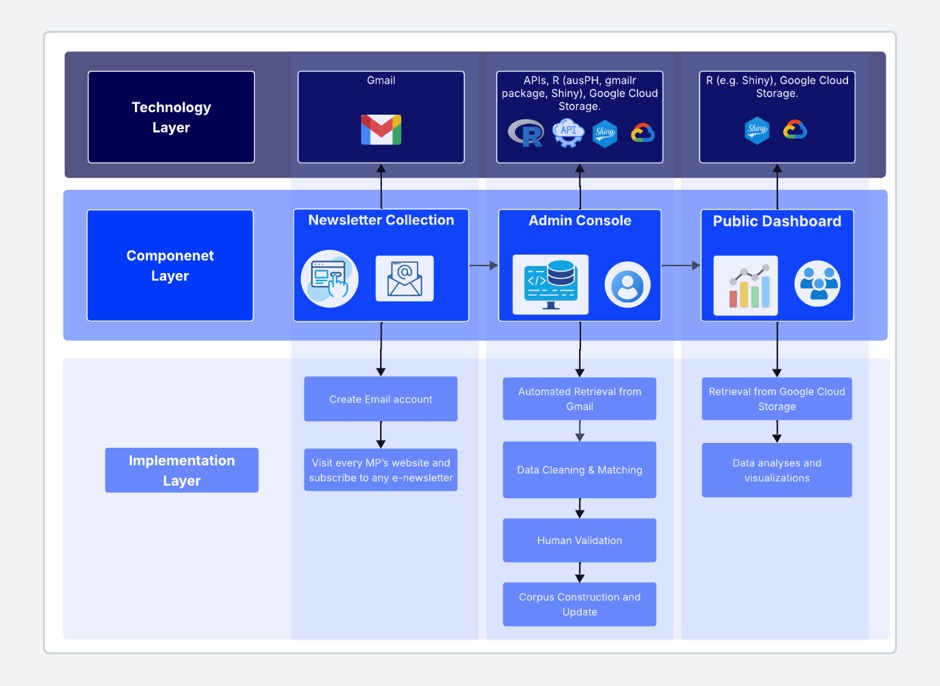


Soto Ruidias & Casey – CanberraInbox: Building a New Data Infrastructure for Political Communication

Rosa Rosmery Soto Ruidias, Australian National University

Daniel Casey, Australian Catholic University

10.25358/openscience-15833, PDF

Political behavior is increasingly mediated, digitally traceable, and both more observable and less observable at the same time. Researchers face mounting constraints in accessing the data required to study political communication systematically. Platform restrictions, application programming interface (API) shutdowns, legal limitations, and proprietary data regimes have transformed what was once a relatively open empirical environment into a fragmented and unequal landscape. At the same time, concerns about bias, misinformation, and disinformation have further heightened the importance of studying public and political communication and messaging from a broad range of sources (Broda & Strömbäck, 2024; Governance Responses to Disinformation, 2020). In response to these changing dynamics, scholars must move beyond reliance on existing datasets and invest in independent, sustainable data infrastructure. CanberraInbox illustrates this approach by systematically capturing forms of political communication that are often overlooked in existing research.

The “age of restricted data,” that this edition of Political Communication Report is structured around, is not merely as a technical constraint, but a structural turning point for the field. It will require scholars to consider less observables data sources and create new ongoing data collection and processing to study political communication. Rather than treating restricted access solely as a limitation, it can be approached as an opportunity to address long-standing empirical and normative biases, particularly the overreliance on platform-mediated communication and the relative neglect of alternative data infrastructures.

From Platform Dependence to Data Construction

Over the past decade, computational political communication research has been heavily shaped by access to large-scale platform data, particularly from Twitter/X, Facebook, and other social media environments (Blakey, 2024; Hasrullah & Suherman, 2025; Trezza, 2023). Studies demonstrated the analytical power of such data, enabling researchers to map networks, measure polarization, and track elite discourse at scale (Ohme et al., 2024). However, this context has been always contingent on a restricted infrastructure. Scholars have been dependent on privately owned platforms  to provide access according to their own terms and timeline (Couldry & Gao, 2026).

That infrastructure has now eroded. API restrictions, increased costs, and data access limitations have made it significantly more difficult (Baumgartner et al., 2020; Bruns, 2021; Chen et al., 2024), if not impossible, for many researchers to replicate earlier studies or build comparable datasets. This has produced a form of platform dependency, where research agendas may shaped not only by theoretical priorities, but also by what data happen to be available (Silverman, Brandon, 2025). In effect, restricted data risks reinforcing existing inequalities within the field while narrowing the empirical scope of political communication research. For example, the increased costs associated with API access are likely to exacerbate differences between researchers with large research budgets and those without. At the same time, there is an ongoing risk associated with the ‘streetlight effect’ or the ‘drunkard’s search’ (Bimber, 2015) if we limit our research to those datasets where we have easy, cheap access. For example, CanberraInbox only captures e-newsletters, with an unknown circulation. We miss out entirely on physical newsletters, because they are much harder to collect and store (Koop & Marland, 2013).

Seeing the “Invisible” Layer of Representation

The CanberraInbox project emerged not only from these broader challenges, but also from a practical insight grounded in firsthand experience. One of this essay’s authors and dataset creator  (Dr Casey) previously worked in a parliamentary office, where one of his professional responsibilities was drafting physical newsletters sent to constituents. This experience revealed a dimension of political communication largely invisible to both researchers and the public: the routine, strategic, and carefully curated communication through which legislators engage directly with their constituents. This form of communication sits largely outside media coverage, social media visibility, and most traditional datasets, yet it is central to how representation is practiced, as it is within these newsletters that legislators explain their work, claim credit, signal priorities, and construct relationships with voters.

CanberraInbox was designed to make this “hidden” layer observable. By subscribing to the newsletter distribution lists of all Members of Parliament (MPs) and systematically collecting their emails, the dataset captures a communication channel that is direct, intentional, and theoretically meaningful. Importantly, this also creates a kind of “bird’s-eye view” of representation that is typically unavailable (Casey, 2025b). It allows researchers to observe what representatives say to their subscribers, which may differ from their public-facing communication. In a context of widespread but often poorly informed political work, this has broader democratic relevance. These e-newsletters are usually taxpayer funded, yet national archives and congressional/parliamentary libraries do not adequately record or maintain access to these important official documents. When DCInbox was established, Cormack (2017: 27) reported that “the Library of Congress reportedly stores hard copy versions of each of these electronic communications,” but did not make electronic versions available. Initial investigations with the Australian Parliamentary Library indicated that they did not maintain any records of MPs physical or e-newsletters.

Many different political communication research questions could be addressed using these data, often in conjunction with other data sources. DCInbox has been used for dozens of different projects, including exploring agenda-setting and framing; differences between parties in communication styles; and emphasis across specific policy areas (e.g. Casey, 2025a).

Designing the Dataset: Minimalism and Extensibility

The development of CanberraInbox was informed by existing projects such as DCInbox and UKMPInbox, as well as collaboration with a computer science research assistant (Ms Soto). This reflects the importance of a multidisciplinary approach, combining political science and data science. While political science provides the theoretical framework and defines the relevant constructs, data science contributes the technical expertise required to build scalable, structured, and reusable datasets.

Rather than attempting to include all possible metadata at the point of collection, the dataset focuses on a small set of core variables: full-text newsletters, timestamps and a stable MP identifier (a unique identifier, created by the parliamentary library [PHID]; name; chamber;, electorate; party; parliamentary term). The rationale is that most additional variables (e.g., electorate characteristics, or electoral margins) can be merged later by individual researchers. What matters at the point of data construction is ensuring a stable, consistent, and extensible core structure (Jonker, 2025). This design also facilitates longitudinal analyses; for example, researchers can examine changes in an MP’s political communication over time by linking this dataset to other that captures parliamentary events, party switches, ministerial promotions, or other developments occurring during the same period. For those variables that are likely to change during a parliamentary term (e.g. a representative changes party, or gets a promotion), it was sometimes difficult to ensure that the data was updated quickly and automatically. Where possible, we would encourage other dataset creators to either focus on a small set of core variables, or leverage other datasets/packages that you are confident will be regularly updated. In this regard, we relied on the AusPH package (Leslie, 2024).

This design choice proved particularly important given the longitudinal and evolving nature of the dataset. By anchoring the data around a unique identifier of member of the parliament, CanberraInbox is designed to remain interoperable with external datasets and adaptable to future research needs. More broadly, this reflects a key lesson: good dataset design is not about maximizing variables at the point of collection, but about ensuring long-term flexibility and reusability (Koesten et al., 2020).

From Dataset to Infrastructure

CanberraInbox is not only a dataset; it is a simple structure ongoing data infrastructure (See Figure 1). Maintaining it involves a continuous workflow that integrates data collection, processing, validation, and dissemination. This includes:

  • – continuous collection of newsletters through systematic subscriptions
  • – automated preprocessing and sender attribution
  • – structured storage and archiving
  • – regular updates as new newsletters are received
  •  

To support this process, an administrative interface was developed to manage the pipeline. This interface allows for the retrieval of new data, facilitates human validation of automated matching, and enables the controlled updating of the dataset and associated corpus. Importantly, this introduces a human-in-the-loop validation stage, where automated processes are reviewed and corrected before being incorporated into the final dataset.

In parallel, a public-facing interface provides access to the dataset for researchers, journalists and members of the public. This interface allows users to search, filter, visualize, and download the data, lowering the technical barriers to use and enabling both academic and non-academic engagement. Together, these components illustrate that CanberraInbox operates as a multi-layered system, combining automated processing, human curation, and public dissemination.

This highlights a critical but often overlooked point: the value of datasets lies not only in their initial construction, but in the ongoing labor required to sustain them. In contexts such as Australia, where funding and institutional support for such work are limited, this labor, spanning maintenance, troubleshooting, and incremental improvement, remains significantly under-recognized. The CanberraInbox architecture and workflow may also serve as a model for implementing other systems that require similar methods.

Figure 1: CanberraInbox Architecture & Workflow

Methodological Challenges and Open Questions

Building an independent dataset does not eliminate methodological challenges. One of the attractions of these e-newsletters was the potential that these were largely under-studied and under-examined by both other researchers and the media, and thus maybe avoids the traditional Schrodinger’s effect / observation problem in research. Once legislators become aware that their communications are being systematically collected and analyzed, they may alter their behavior. Whether this constitutes a source of bias or simply reflects the inherently performative nature of political communication remains an open question. However, this is a standard issue in political communications research and may itself be a meaningful object of analysis.

Second, there are ambiguities in the unit of analysis. In more party-centric systems, such as New Zealand, newsletters may be distributed centrally rather than by individual MPs, complicating attribution. Similarly, we have been informally told that some MPs send multiple targeted newsletters (e.g., segmented by postcode), raising questions about whether any single subscription captures the full scope of their communication. However, it would be difficult to systematically identify this.

Third, there are ongoing technical and administrative challenges, including:

  • – matching newsletters sent from multiple email addresses to a single MP identifier
  • – filtering out irrelevant or misdirected communications
  • – maintaining coverage as MPs enter, exit, or change roles within parliament
  •  

These challenges underscore that dataset construction is not a one-off task, but an iterative process requiring continuous refinement and oversight. This perspective is also supported by experts and should be reflected in the ongoing improvement of the development process (Venkatasubramanian et al., 2024).

Expanding the Empirical Scope

There are a range of ways that future researchers could expand the scope of this work. We initially started collecting similar e-newsletters from the other two remaining Anglosphere countries, New Zealand and Canada. These were discontinued, however, due to some of the methodological challenges outlined above, primarily the lack of local knowledge hampered our ability to maintain coverage.

While the current dataset focuses on textual content, the underlying data structure allows for future extensions. Because newsletters are stored in HTML format, it is technically feasible to archive images and other embedded elements. Incorporating such data would enable the study of visual political communication, though it would require additional storage capacity and processing resources.

More broadly, CanberraInbox illustrates how datasets can evolve incrementally over time. By designing for extensibility from the outset, new layers of data can be added without compromising the integrity of the original structure. This reinforces the importance of viewing datasets as dynamic and evolving resources rather than static products, while adopting a flexible and simple design that balances information needs with available resources.

If others are interested in starting something similar, we are happy to share our experiences. The initial set-up is quick and easy – a dedicated Gmail account, and the time to visit every MP’s website and subscribe to any e-newsletter. There were zero upfront costs. The R script to access the Gmail API and download the emails to a CSV file are similarly relatively simple.  Code is available on GitHub.

Rethinking Data in Political Communication

The broader implication is that the age of restricted data should push the field toward a different model of empirical research. Rather than relying on externally controlled data sources, researchers can: build datasets aligned with theoretical constructs, make data generation processes transparent, and treat absence and variation as analytically meaningful

This shift also requires rethinking how the field values research contributions. The construction and maintenance of datasets, tools, and infrastructures should be recognized as central scholarly work, rather than peripheral technical support.

Conclusion

Restricted data has exposed the fragility of a research paradigm built on platform access. But it has also created an opportunity to rethink the empirical foundations of political communication research. Projects like CanberraInbox demonstrate that it is possible to build independent, theoretically grounded datasets that expand the scope of the field. More importantly, they show that doing so requires not only careful technical design, but sustained infrastructural work, ongoing maintenance, and methodological reflexivity. However, this does not need to be overly complex; in fact, it can be achieved through the adoption of a simple architecture.


References

Baumgartner, J., Zannettou, S., Keegan, B., Squire, M., & Blackburn, J. (2020). The Pushshift Reddit Dataset. Proceedings of the International AAAI Conference on Web and Social Media, 14, 830–839. https://doi.org/10.1609/icwsm.v14i1.7347

Blakey, E. (2024). The Day Data Transparency Died: How Twitter/X Cut Off Access for Social Research. Contexts, 23(2), 30–35. https://doi.org/10.1177/15365042241252125

Bimber, B. (2015). What’s next? Three challenges for the future of political communication research. New technologies and civic engagement, 215-233.

Broda, E., & Strömbäck, J. (2024). Misinformation, disinformation, and fake news: Lessons from an interdisciplinary, systematic literature review. Annals of the International Communication Association, 48(2), 139–166. https://doi.org/10.1080/23808985.2024.2323736

Bruns, A. (2021). After the ‘APIcalypse’: Social media platforms and their fight against critical scholarly research. Disinformation and Data Lockdown on Social Platforms, 14–36.

Casey, D. (2025a). Australia’s Foreign Policy in the Trump Era: Balancing Responsiveness and Responsibility?

Casey, D. (2025b). CanberraInbox: Political Communication, the Personal Vote and Representation Styles—Studying Legislators’ e‐Newsletters in Australia. Legislative Studies Quarterly, 50(3), e70004. https://doi.org/10.1111/lsq.70004

Chen, Y., Sherren, K., Lee, K. Y., McCay-Peet, L., Xue, S., & Smit, M. (2024). From theory to practice: Insights and hurdles in collecting social media data for social science research. Frontiers in Big Data, 7, 1379921. https://doi.org/10.3389/fdata.2024.1379921

Couldry, N., & Gao, G. (2026). The Space of the World, Data Colonialism, and Social Contract: Reconstructing Digital Futures—A Dialogue with Nick Couldry. Communication and the Public, 11(1), 46–52. https://doi.org/10.1177/20570473261424566

Governance responses to disinformation: How open government principles can inform policy options (OECD Working Papers on Public Governance No. 39; OECD Working Papers on Public Governance, Vol. 39). (2020). https://doi.org/10.1787/d6237c85-en

Hasrullah, H., & Suherman, A. (2025). From Speeches to Tweets: The Mapping of Trend and Evolution of Political Communication in Digital Media. Thammasat Review, 28(2), 205–231.

Jonker, T. K., Alexandra. (2025, July 25). What Is a Data Architecture? | IBM. https://www.ibm.com/think/topics/data-architecture

Koesten, L., Vougiouklis, P., Simperl, E., & Groth, P. (2020). Dataset Reuse: Toward Translating Principles to Practice. Patterns, 1(8), 100136. https://doi.org/10.1016/j.patter.2020.100136

Koop, R. and Marland, A. (2012), Insiders and Outsiders: Presentation of Self on Canadian Parliamentary Websites and Newsletters. POI, 4: 112-135. https://doi.org/10.1002/poi3.13

Leslie, Pat. 2024. “AusPH: An R Package to Retrieve Data from the Parliamentary Handbook of the Commonwealth of Australia.” https://github.com/palesl/ausPH

Ohme, J., Araujo, T., Boeschoten, L., Freelon, D., Ram, N., Reeves, B. B., & Robinson, T. N. (2024). Digital Trace Data Collection for Social Media Effects Research: APIs, Data Donation, and (Screen) Tracking. Communication Methods and Measures, 18(2), 124–141. https://doi.org/10.1080/19312458.2023.2181319

Silverman, Brandon. (2025). Why Commercial Tools Can Scrape Social Media But Researchers Can’t | TechPolicy.Press. Tech Policy Press. https://www.techpolicy.press/why-commercial-tools-can-scrape-social-media-but-researchers-cant/

Trezza, D. (2023). To scrape or not to scrape, this is dilemma. The post-API scenario and implications on digital research. Frontiers in Sociology, 8, 1145038. https://doi.org/10.3389/fsoc.2023.1145038

Venkatasubramanian, H., Anisa, M., Ramesh, S. R., Subbiah, B., & Vijayaraghavan, A. (2024). Application of Data Analytics in IT project Management: Improving efficiency, Risk Mitigation. Proceedings of the 6th International Conference on Information Management & Machine Intelligence, 1–9. https://doi.org/10.1145/3745812.3745882


Rosa R. Soto Ruidias is a PhD student at the ANU School of Computing. She was the research assistant and coder on the CanberraInbox project. Her research interests include Data Fairness and AI for Public Good, with a current focus on investigating political biases in LLMs and their societal implications. Her work is built on seven years of experience across Peru and Australia, where she contributed with IT implementations—including web platforms, datasets, and analytical dashboards—alongside quality management and educational accreditation. By leveraging learning analytics and data science, she aims to develop equitable AI systems that enhance public service and educational transparency. 


Dr Daniel Casey is a lecturer in politics and international relations at the Australian Catholic University. He completed his PhD in August 2024 at ANU, examining letters from members of the public to Australian Prime Minister Howard – who writes; why they write; and the impact of the letters on public policy and the political agenda. His broader research interests include elite-mass linkages, with a focus on different forms of communication between the public and leaders; public policy and public administration; and representation. These research interests are driven by his 15-year public service career, including working for members of parliament.

[1] https://enewsletters.shinyapps.io/canberrainbox/

[2] https://www.dcinbox.com. Separately, Dr Adam Ozer started UK MP Inbox (https://ukmpinbox.shinyapps.io/uk_mp_inbox), which means that there is now similar comparable data across Australia, the UK and the USA.


[3] http://ukmpinbox.shinyapps.io/uk_mp_inbox

[4] https://github.com/research-projects-info/canberraInbox

Neyazi & Lawrence – Peer Review Challenges and the Future of Scholarly Publishing in the Age of AI: A Report

Taberez Ahmed Neyazi, National University of Singapore

Regina Lawrence, University of Oregon

10.25358/openscience-15835, PDF

On April 10. 2026, we hosted a gathering of journal editors to collectively reflect on the evolving challenges facing peer review and scholarly publishing and to develop practical, collaborative responses. Participants included twenty editors in chief, co-editors, and associate editors of journals in communication, political science, and adjacent fields, as well as one publisher’s representative and one academic association representative. Discussions ranged from reviewer recruitment and editorial workload to diversity, open access, transparency, and the growing influence of generative AI. While participants examined a wide range of issues, a consistent theme emerged: many of the challenges confronting journal editors are systemic rather than journal-specific. Scholarship continues to be heavily dominated by the Global North, with limited representation from the Global South, and issues of authorship and editorial board diversity remain ongoing challenges. Increasing submission volumes, reviewer fatigue, inequities in publication opportunities, and uncertainty surrounding AI all require coordinated responses that extend beyond individual editorial teams. This workshop was followed up by a Roundtable discussion during the 76th International Communication Association (ICA) meeting on June 6, 2026 in Cape Town, which brought together some of the original participants along with new participants to further reflect on these themes. 

Editors Workshop supported by the Political Communication division of International Communication Association (ICA) and American Political Science Association (APSA)


Major Challenges Facing Peer Review and Scholarly Publishing

Rising Workloads and Capacity Constraints

Participants in the workshop and the panel consistently reported substantial growth in manuscript submissions. Some journals have experienced a doubling of submissions in recent years, while others now receive several thousand manuscripts annually, driven in part by the increasing availability of AI-assisted writing tools that reduce the effort required to produce manuscripts. At the same time, journals are receiving more submissions that fall only marginally within their scope, creating additional screening burdens.

These trends have significantly altered the editorial role. Editors described spending less time on substantive intellectual engagement and more time managing workflows, identifying suitable reviewers, monitoring timelines, and communicating decisions. The administrative burden of running a journal has expanded without corresponding increases in support or resources.

ICA Roundtable, June 4-8, 2026, Cape Town

Participants also expressed frustration with manuscript management systems. Reviewer matching tools often rely on self-reported keywords rather than demonstrated expertise, reviewer information is frequently siloed within individual journals, and systems often fail to automate routine processes effectively. Many editors described developing informal workarounds rather than relying on platform functionality, which further places extra responsibilities on the part of editors.

Reviewer Recruitment and Sustainability

Reviewer recruitment emerged as one of the most pressing concerns discussed during the workshop and the panel. Participants emphasized that the challenge is not simply a shortage of qualified reviewers but a concentration problem. Review requests are repeatedly directed toward a relatively small group of visible scholars, while many capable researchers at smaller institutions, outside dominant networks, or in underrepresented regions are rarely invited to review. The problem is compounded by the rising number of submissions from underrepresented parts of the world, which can increase the challenge of finding appropriate reviewers with relevant expertise.

The problem is also compounded by uneven participation from editorial board members. While many journals maintain extensive editorial boards, some members contribute little to reviewing or governance. As a result, boards sometimes function more as signals of prestige than as active contributors to editorial processes.

Participants also highlighted the absence of systematic reviewer training—a problem that may increase as editors reach beyond their limited networks of established reviewers. Most scholars learn to review informally through advisors or experience as authors, resulting in substantial variation in review quality. However, declining review quality may also stem from the growing number of review requests and the limited time reviewers have available to undertake thorough evaluations. That peer review remains largely invisible within promotion and tenure systems creates weak incentives for scholars to respond to review invitations and contribute in-depth reviews.

Equity, Diversity, and Inclusion

Many journals reported growth in submissions from scholars outside North America and Western Europe, particularly from the Global South, with a large number of submissions received from China. However, increases in submissions have not translated into equivalent increases in publication rates from the underrepresented regions.

Participants identified several reasons for this gap. Review standards often reflect methodological expectations developed in well-resourced research environments. Studies relying on convenience samples, alternative data sources, or locally available methods may be judged against standards that are difficult to meet in under-resourced contexts. Editors emphasized that these challenges often reflect disparities in training opportunities, infrastructure, and resources rather than differences in scholarly potential.

Workshop participants also noted that diversifying editorial boards, while important, does not automatically lead to more diverse publication outcomes. Similarly, citation practices continue to favor scholars from the United States and Western Europe, reinforcing existing inequalities in visibility and influence. Several participants argued that diversity discussions should extend beyond geography and demographics to include methodological and epistemological diversity, particularly for qualitative and critical scholarship.

Generative AI and Emerging Publishing Challenges

Virtually all participants across both the workshop and the panel agreed that AI is a major contributor to the rapid rise in submissions. Concerns about manuscript quality, fabricated citations, and publication incentives predate AI but now occur at greater scale and speed. But AI-detection tools are unreliable and potentially harmful if used as the basis for editorial decisions, and false positives pose particular risks for non-native English speakers. Workshop participants agreed that journal editors need more nuanced policies that focus on uses that may impact the reproducibility and integrity of data and analysis, for example, rather than generalized prohibitions on AI use.

Also, existing guidelines provide limited direction regarding reviewer use of AI. Participants raised concerns about editors or reviewers uploading manuscripts to public AI systems, potentially exposing confidential content to model training without authors’ knowledge or consent. But participants also questioned whether policies that permit some forms of AI-assisted writing by authors while prohibiting all reviewer use are conceptually sustainable.

Overall, the absence of consistent policies across journals, publishers, and scholarly associations leaves room for individual journals to experiment with new policies, but most participants agreed that some degree of coordination will be required to build policies and shape professional norms.

Emerging issues—including synthetic data generation, AI-assisted research design, and verification of author identities—suggest that AI governance will remain a rapidly evolving challenge.

Economic and Structural Challenges

Discussions of publishing economics revealed widespread concerns about transparency and resource allocation. Article processing charges (APCs) were viewed as expensive, inconsistently justified, and only partially effective as mechanisms for promoting equity. Waiver systems often fail to support scholars who do not qualify for assistance but cannot realistically afford APCs.

Editors also highlighted the substantial institutional subsidies supporting academic publishing. Universities frequently provide course releases, administrative support, and other resources that enable editorial work, while publishers capture much of the resulting revenue.

Participants described contract negotiations between scholarly societies and publishers as highly asymmetric. Editors often lack information about costs, revenues, and profit margins, as well as about arrangements struck by other journals, limiting their ability to advocate effectively for resources. Concerns were also raised about declining copy-editing standards and reduced investment in production quality and increasing reliance on automation.

Transparency and Accountability

The workshop identified transparency as a recurring concern across multiple aspects of scholarly publishing. Participants questioned the accuracy of many commonly reported journal metrics, noting that automated publisher reports often exclude desk rejections thereby underreporting the actual wait time to peer review process faced by authors.

Participants further noted the absence of consistent mechanisms for sharing editorial data, including acceptance rates, desk rejection rates, diversity indicators, and policy changes. Without transparent reporting, it is difficult for authors, editorial boards, and scholarly communities to assess journal performance, identify the underlying issues and hold institutions accountable.

Solutions and Recommendations

Actions for Editors

Participants identified a range of practical steps that journals could implement—though participants also noted that increasing workloads and inadequate publisher support can limit editors’ capacity to innovate.

First, editors can protect reviewer capacity through more efficient editorial triage, including higher desk rejection rates. Desk rejects can include developmental feedback, even when brief, to help authors understand editorial decisions. For journals receiving a high volume of submissions, such developmental feedback could be restricted to early career scholars and/or to manuscripts that clearly fall within the journal’s scope.

Second, journals can broaden reviewer pools by actively identifying scholars outside traditional networks, recruiting internationally, and involving early-career researchers more systematically. Editorial boards should be refreshed regularly, and editors should consider adding more early career scholars to their boards.

Third, reviewer development should become a more deliberate component of journal operations. Shadow-review programs, detailed decision letters that demonstrate engaged and constructive reviews can all contribute to building review capacity over time. Reviewer training initiatives could be offered through special workshops during the associations’ annual meetings.

Fourth, editors can promote inclusion by creating mentorship pathways for promising but underdeveloped submissions, encouraging broader citation practices, supporting methodological diversity, and organizing outreach activities for international and early-career scholars. Journals can create teams of mentors composed of editorial board members.

Fifth, greater editorial oversight and accountability are needed to maintain an efficient review process. Editors should actively monitor manuscript progress and routinely follow up on overdue reviews, particularly when review timelines exceed the expected 60- or 90-day period. Keeping authors informed when delays occur is particularly important for junior faculty members and early-career researchers, for whom timely publication is often critical for career progression, promotion, and tenure considerations.

Sixth, with respect to AI, participants recommended moving beyond simple disclosure checkboxes toward more substantive reporting of how AI tools were used during research and manuscript preparation. Journal guidelines should clearly distinguish acceptable and unacceptable uses of AI for both authors and reviewers, particularly regarding confidentiality and manuscript uploading. 

Finally, editors can strengthen accountability through annual editor reports, journal policy updates, and regular communication with authors and editorial boards through editorials. Some editors recommended developing improved manuscript-transfer mechanisms, where articles could be transferred between journals along with reviewer comments, a model often followed by natural science journals.

Actions for Publishers

Many of the challenges identified during the workshop and the panel require publisher-level solutions.

Participants emphasized the need for greater investment in editorial infrastructure, including funding for editorial assistants and administrative support. Improved reviewer-matching systems that draw on publication records, reference networks, and demonstrated expertise could significantly reduce editorial workload. Instead of simple keyword matching, reviewers should be identified based on domain expertise that could be easily integrated within automated submission systems.

Publishers could also facilitate the creation of shared reviewer databases, portable reviewer-credit systems, and cross-journal recognition programs. Such infrastructure would help distribute review requests more equitably while providing meaningful recognition for reviewer contributions. More active reviewers should be rewarded with APCs credit by the publisher that could be used for open access publication.

AI governance was viewed as another area requiring publisher leadership. To the extent that the rise of AI necessitates new professional norms and practices, clear policies on manuscript confidentiality, AI-assisted workflows, and acceptable uses of AI should be established at the publisher level rather than left entirely to individual journals.

Participants also called for greater transparency regarding APCs, revenues, costs, and journal performance metrics. Publishers should provide associations and editors with meaningful financial information and ensure that publicly reported metrics accurately reflect peer review timelines. Reinvestment of publishing revenues into editorial support, reviewer development, and mentoring programs was widely viewed as both feasible and necessary.

Actions for Scholarly Associations and the Academic Community

Our workshop and the roundtable discussion repeatedly highlighted the importance of collective action beyond individual journals or publishers.

For example, to continue building and refreshing the pool of reviewers, norms of reciprocity need to be reinforced in the academic community. Authors submitting their work to a journal should be willing to then review for that particular journal irrespective of the outcome of their own manuscript.

Scholarly associations are well positioned to coordinate graduate-level reviewer training, develop recommended frameworks for AI policies and practices, support diversity initiatives, and facilitate mentoring programs. They could also serve as collective bargaining bodies during publisher negotiations, advocating for minimum standards regarding editorial compensation, APC transparency, and resource allocation.

Participants emphasized that many structural challenges—including reviewer recognition, diversity outcomes, AI governance, and publishing economics—cannot be solved by journals acting independently. Field-wide coordination will be essential for meaningful reform.

Finally, the participants in both the workshop and the panel emphasized that the work of the journal editor is often solitary and siloed, and called for regularly organized roundtable panels as well as private editor gatherings at future conferences. They also recommended conducting a comparative survey of editorial resources and workloads, to further understand these challenges and generate meaningful interventions.

Conclusion

The workshop and the follow up roundtable highlighted a publishing ecosystem under increasing strain but also identified significant opportunities for improvement. Reviewer shortages, editorial workload pressures, diversity challenges, economic inequities, and AI-related uncertainties are interconnected problems that require coordinated responses.

Three broad conclusions emerged. First, the most significant challenges facing scholarly publishing are systemic rather than journal-specific. Second, while generative AI is having a significant impact on the quantity and quality of submissions, it is also amplifying longstanding weaknesses in the peer-review system that predate AI’s rise. Third, meaningful reform will require collaboration among editors, publishers, scholarly associations, universities, and researchers themselves.

Sustaining peer review as a cornerstone of scholarly communication will depend not only on technological innovation but also on renewed investment in the people, institutions, and collective norms that make scholarly publishing possible.

Acknowledgements:

The workshop was made possible with the generous support of the Political Communication division of International Communication Association (ICA) and American Political Science Association (APSA). The authors are particularly grateful to Kate Kenski for supporting the initial idea for the workshop. We also extend our sincere thanks to Silvio Waisboard for hosting the event at George Washington University (April 10, 2026). Finally, we would like to thank the workshop and roundtable participants, as this report is a compilation of their valuable insights.

Participants in the workshop

Adam Berinsky (American Journal of Political Science), Porismita Borah (International Journal of Public Opinion Research), David R. Ewoldsen (Journal of Communication), Timothy Hellwig (The Journal of Politics), Phil Jones (Public Opinion Quarterly), Sebastian Karcher (American Political Science Review), Jörg Matthes (Communication Theory), Tai-Quan “Winson” Peng (Human Communication Research), Mike Schmierbach (Mass Communication and Society), Lijiang Shen (Communication Methods and Measures), Elizabeth Suhay (Political Psychology), Terri Towner (Journal of Information, Technology and Politics), Silvio Waisbord (International Journal of Communication), Shuhua Zhou (Journal of Broadcasting & Electronic Media), Matt Zook (Big Data and Society).

Organizers: Taberez A. Neyazi (The International Journal of Press/Politics) and Regina Lawrence (Political Communication)

External Representatives

Kate Kenski (ICA Political Communication Division), Sandra Vera Zambrano (ICA Political Communication Division), Jonathan Krebs (SAGE Publishing), Madison Schroder (Research Assistant)

Participants in the ICA Roundtable, June 4-8, 2026, Cape Town

Porismita Borah (International Journal of Public Opinion Research), Dan Mercea (Information, Communication and Society), Folker Hanusch (Journalism Studies), Oscar Westlund (Digital Journalism), Silvio Waisbord (International Journal of Communication), Zizi Papacharissi (Social Media and Society)

Organizers: Taberez A. Neyazi (The International Journal of Press/Politics) and Regina Lawrence (Political Communication)


Dr Taberez Ahmed Neyazi is Associate Professor and Director of Digital Campaign Asia project in the Department of Communications and New Media at the National University of Singapore (NUS). He is also a Principal Investigator at the Centre for Trusted Internet and Community, NUS. He has authored Political Communication and Mobilisation: The Hindi Media in India (Cambridge University Press, 2018) and published several journal articles and book chapters. He is a Member in the School of Social Science at the Institute for Advanced Study (IAS), Princeton (2025 –2026). He is also the Editor-in-Chief at The International Journal of Press/Politics.

Regina G. Lawrence is Professor and Dean in the School of Journalism and Communication at the University of Oregon. Her research focuses on press-state relations; journalistic norms, routines and innovations; local news and information ecosystems; and the role of the media, gender, and social identity in political communication. Her studies have appeared in numerous journals, and her books include When the Press Fails: Political Power and the News Media from Iraq to Katrina; Hillary Clinton’s Race for the White House: Gender Politics and the Media on the Campaign Trail; and The Politics of Force: Media and the Construction of Police Brutality, which was reissued in 2022 by Oxford University Press.


Awardee Interview: The International Journal of Press/Politics Hazel Gaudet-Erskine Best Book Award 2026

Name(s) & affiliation:

  • Dr Ayala Panievsky, Department of Journalism, City St George’s University of London
  •  

Project title:

  • The New Censorship: How the War on the Media is Taking Us Down
  •  

Publication reference, link (APA 7th):

Tell us something about you/your team and how and why you decided to focus on this research

  • When I started my Masters, I was curious about what made journalists and newsrooms so spectacularly ineffective when facing populist authoritarianism. I used to work for Haaretz newspaper, so I was familiar with PM Benjamin Netanyahu’s war on the media for decades. What stroke me was how big media outlets, with significant power and communicative skills, does such a poor job at protecting its reputation and public authority. This was where it all started.

Summarize the main takeaway of your project.

  • The new censorship looks slightly differently from the old-school one, operating on journalists and audiences simultaneously, manipulating new technology and journalists’ professional norms against them – and us. If we wish to live in open societies, or protect our right to know, we will all have to become media activists ASAP.

What made this project a “polcomm project”?

  • This project focuses on political attacks against journalists, and the media’s responses to them. In this sense, it captures the hostile, high-risk environment in which polcomm is currently shaped. In the last chapter, I try to turn the research findings – by myself and by many other excellent scholars worldwide – into concrete action points for reporters, audiences, and policy makers. I hope at least some of them will choose to follow these guidelines!

What, if anything, would you do differently, if you were to start this project again? (What was the most challenging part of this project? …& how did you overcome those challenges?)

  • To be honest, the most difficult challenge when writing this book was the ongoing war in Gaza, and then in Iran and Lebanon – and how it shifted the public conversation on Israel and Palestine, back home as well as globally. I found myself struggling not to practice some self-censorship myself. In the introduction chapter, I reflect on this process. At times, it felt like there was nothing I could say that won’t hurt either my family and friends back home or my professional community in the UK. While clearly emotionally taxing, I still strongly believe it is necessary for us to insist on having such difficult conversations, even when it is painful, disappointing, heartbreaking.

What other research do you currently see being done in this field and what would you like to see more of in the future?

  • My writing on Anti-media media (in the book and in a separate article) was very much informed by the work of Cherian George in Hong Kong, Kalyani Chadha in India, and AJ Bauer in the US. I think it is critical that more scholars engage – normatively, not just empirically – with the very basic questions that require answers for us to ever improve and empower journalism: What counts as journalism? Who is a journalist? And who gets to decide? It is a political minefield, but unless we go there – bad faith actors will make these calls for us.

What’s next? (Follow-up projects? Completely new direction?)

  • I’m currently working on a few new research projects. One of them seeks to expand our understanding of bottom-up media bashing, which was not studied as comprehensively as top-down anti-media populism. But I keep taking on more and more research projects and initiatives, which probably means I will never publish a second book 🙂